Fast, responsible, with people at it's heart
The hospitality industry is evolving rapidly. Guest demands are changing, staff shortages arise at short notice, and new technologies are constantly entering the market. The question, therefore, is how to best adapt to these constantly changing circumstances.
At luca, we rely on short development cycles. All features, whether AI-powered or not, are not created in long planning loops, but in iterative steps. We test quickly, evaluate the results, and then continue development. This allows us to genuinely respond to the practical needs of the hospitality industry.
When you work with luca, our use of AI means you benefit early from new developments and can provide feedback that is genuinely incorporated into further enhancements.
At luca, a clear rule applies: AI supports, analyzes, suggests, and accelerates. It automates repetitive steps that would otherwise take a lot of time. But it doesn't decide alone. Every output, every function, every automated recommendation generated by our AI-powered processes undergoes a human review step.
For us, this is not a precaution, but the only right way to work with AI in the hotel industry. AI systems are very good and fast at recognizing patterns and thereby accelerating processes. However, they are not as good at understanding the specific context of an operation, interpreting an unusual situation, taking responsibility for a decision, or coming up with truly creative solutions. Only humans can do that.
Specifically, for AI in the luca system, this means: Everything is checked before it goes live. Proposed solutions go to the personnel in the operation who can act upon them and make corrections. The responsibility remains with the team.
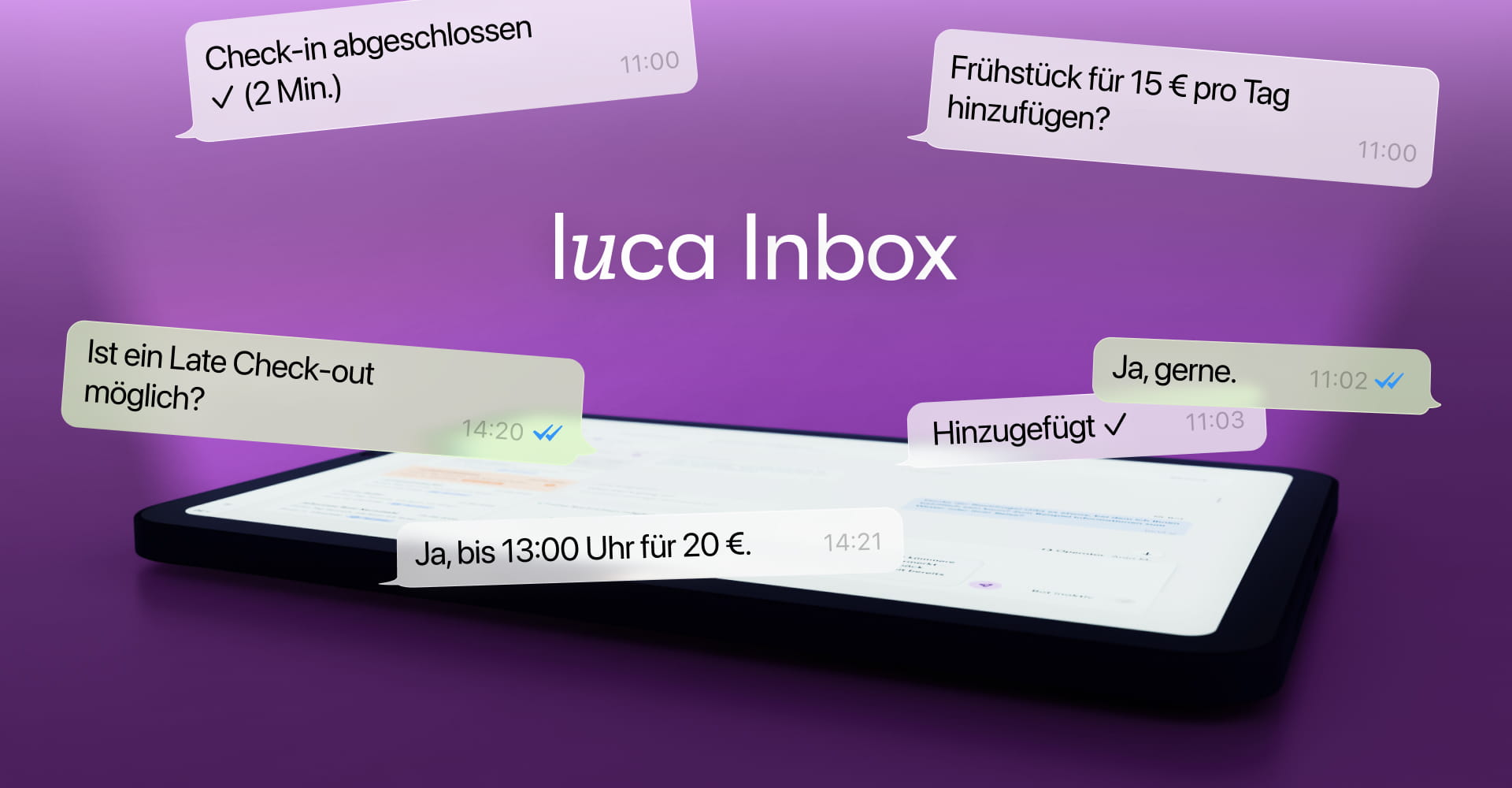
We see ourselves as a digitalization partner for the hospitality industry, and in this role, we consider it our duty to provide you with the support you need to effectively implement technology in your operations. We don't use AI just because it's a trending topic, but because, together with our partners and customers in the industry, we've identified specific bottlenecks in restaurants and hotels that can be solved with technology. For example, our communication AI was developed to relieve reception teams and ensure 24/7 accessibility.
Even though AI is currently a hot topic, those who start with it now are still early adopters. That's precisely why now is a good time to create structures that can grow with increasing demands and easily allow for the integration of new AI functions without having to rebuild the entire system.
What this means for you: No elaborate AI master plan is needed to get started. A first step is enough. We begin with a specific problem you're facing and find a solution for how AI can simplify your daily operations. The goal is to build trust through implementation, allowing us to expand from there.
AI in the hospitality industry relieves teams of repetitive tasks and ensures better accessibility. Specifically, it handles, for example, answering recurring guest inquiries, suggesting responses, or summarizing information — thereby freeing up time for tasks that require human interaction. At luca, every suggestion undergoes a human review step before it goes live.
Yes. Smaller businesses, in particular, benefit from AI because it mitigates staffing shortages without incurring additional costs. No elaborate AI master plan is needed to get started — a first step addressing a specific problem is sufficient. This allows for the creation of structures that can grow with increasing demands.
At luca, AI does not make decisions independently: It analyzes, suggests, and accelerates, but every output is reviewed by humans before it is implemented. The responsibility remains with the operational team. This combines the speed of AI with the contextual knowledge and experience of the employees.




.png)


