
A hotel is currently being built in China, that operates entirely without human staff. On the artificial West Island of the Shenzhen-Zhongshan Link in the Pearl River Delta, Pudu Robotics and Shenzhen CTID are working on a property where robots will take on every role: reception, room service, cleaning, food preparation, and guest relations. The first test rooms are scheduled to open by the end of 2026, with the official opening planned for 2027. 44 high-quality rooms, a restaurant, and a gym, all controlled by a single networked system.
At luca, we also develop concepts with hotels that allow a property to be run entirely without staff or to digitally map the entire guest journey. What's possible isn't always sensible everywhere, however, and raises the question: How much automation actually suits your hotel?
The example from China is not an isolated case. In Japan, the Henn na Hotel Group has been operating properties for years where robots are part of everyday life. The first of these even holds a Guinness World Record as the world's first hotel where robots work. At the reception, depending on the location, dinosaur robots, humanoid assistants, or holograms greet guests. Additionally, there are automatic luggage lockers, smart sleep technology, and systems that refresh clothes overnight.
What's striking about these pioneers is less the technology itself than the idea behind it. Henn na Hotel states it on its own website this way: The use of cutting-edge technology is never designed to generate quick attention. At its core, it's always about one question – "How can we ensure our guests feel more comfortable during their stay?" So, even where robots play the main role, the guest experience is central, not just a gimmick.
We share this exact philosophy at luca. Digital tools can help, but they cannot replace human contact. For us, this is not a contradiction, but a conscious decision.
A fully automated operation is a sensible solution for certain properties. It works well where the digital experience itself is the reason for the visit – for example, in tech-savvy destinations where guests actively seek innovation. In markets with persistent staff shortages, technology can also fill gaps that would otherwise be difficult to address. And for highly standardized concepts where processes remain consistent anyway, automation plays to its strengths: available around the clock, consistent in quality, without waiting times.
However, anyone pursuing this path should think it through thoroughly. A property like the one in Shenzhen is built from the ground up as a closed, networked system. The individual robots access the same intelligence, from reception to delivery to cleaning. It is this integration that supports the concept – not the individual robot.
For the vast majority of hotels, however, the appeal is not in an all-or-nothing approach. It lies in selectively automating individual parts and using technology precisely where it brings the greatest benefit to your team and your guests.
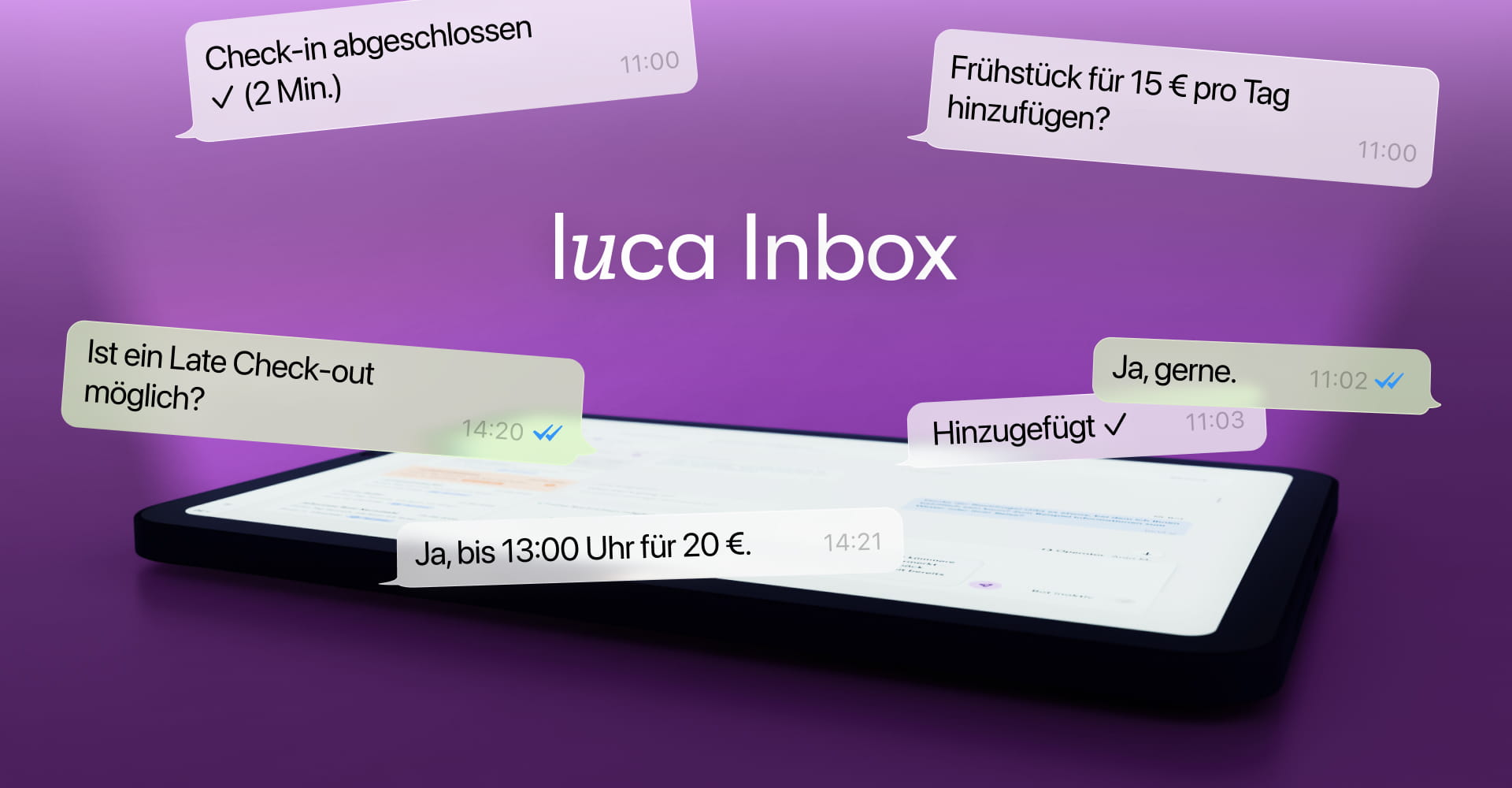
Repetitive tasks are particularly well-suited for this. A digital check-in takes the pressure off arrivals, especially during peak times or late in the evening. Mobile payment shortens waiting times at the end of a restaurant visit. A digital guest directory is always up-to-date, available in multiple languages, and saves you from using last year's laminated sheet. All of this runs in the background and creates breathing room.
This freed-up time is the real benefit. Because the time your team doesn't spend on routine tasks flows back into personal contact: the conversation at reception, the dinner recommendation, the small gesture that makes a stay memorable. Technology takes care of the recurring tasks. People take care of what truly defines hospitality.
So, the exciting takeaway from the pioneering projects in Asia isn't that machines will replace people. It's that even the most ambitious concepts apply the same benchmark as a small family hotel: Does the guest feel comfortable?
Automation is not an end in itself. It's a tool you use to decide where efficiency helps and where the human touch remains irreplaceable. A robot can reliably deliver luggage to a room. Whether someone feels welcome is often determined by a smile, by attention to the right small detail, by genuine interest.
The good news: You don't have to choose between progress and personal connection. Many successful establishments find a middle ground. They use technology to simplify daily operations, thereby gaining time for their guests.
Therefore, the question isn't whether you automate your hotel, but which tasks you delegate and which you consciously keep in human hands. Those who make this decision clearly build an operation that is technologically future-proof and yet radiates the very reason people travel: the feeling of being welcome.
You don't have to choose between "all digital" or "business as usual." Here are areas where partial automation makes immediate sense for most operations:
Pre-Arrival: Digital check-in, requesting room preferences, automatically sending stay information – all of this can happen before your guest even arrives. Your team can then focus on the guest's arrival, not on paperwork.
Check-in: Self-check-in terminals or digital processes via the app reduce queues. But your team is still there – as a point of contact, not just a clerk.
During the stay: Automated communication for special requests, digital guest directories, smart notifications. Everything to keep guests informed without them having to search.
Check-out and follow-up: Automated invoicing, review requests, feedback loops. This way, you gain insights without creating effort.
Guinness World Records: First robot-staffed hotel (July 17, 2015)
New Atlas: World's first hotel entirely staffed by robots to open in 2027 (June 26, 2026)
Pudu Robotics: Pudu Robotics and Shenzhen CTID Co. Ltd Launch the World's First Full-Scenario Robot-Serviced Hotel Project (June 1, 2026)
Hotel automation ranges from individual digital processes to fully staffless operations. Full automation is particularly worthwhile where the digital experience itself is the reason for the visit, in markets with persistent staff shortages, or for highly standardized concepts. However, for most hotels, targeted automation of individual processes is the more sensible approach.
No. Even pioneering projects like the Henn na Hotel in Japan don't use technology to replace staff, but to enhance the guest experience. Technology handles repetitive tasks; genuine hospitality – the smile, the attentiveness, the conversation – remains your team's responsibility.
Four areas are particularly suitable: Pre-Arrival (digital check-in, room preferences, automatic pre-arrival information), Check-in (self-check-in terminals or app to reduce waiting times), the stay itself (digital guest directory, automated communication for special requests), as well as Check-out and Follow-up (automatic invoicing, review requests).





.png)


