What a guest experience platform should cover
A guest experience platform bundles digital guest communication and stay-related operations into one system: check-in, digital guest directory, chat, upselling, payment, and check-out. You can find the right one using six criteria: journey coverage, payment and POS, PMS integration, language and support, hardware, and pricing model.
What a guest experience platform should cover
This comparison was created by luca, one of the providers listed here. To help you put it into perspective: all information is based on publicly available provider data as of July 2026. We have omitted anything that could not be verified.
The market has diversified significantly in 2026. Some providers cover the entire guest journey, while others specialize in chat, in-room tablets, or registration processes. Here, you will find the six criteria that matter when choosing, an overview of 13 platforms, and a short profile for each provider with a clear recommendation on who it is best suited for.
Key takeaways
- A guest experience platform bundles check-in, digital guest directories, chat, upselling, payment, and check-out into a single system.
- Six criteria are decisive: journey coverage, payment and POS, PMS integration, language and support, hardware, and pricing model.
- The scope varies greatly. Full-journey platforms, in-room tablets, AI chat specialists, and registration tools are all competing in the same market.
- Integrated payment and a genuine restaurant POS are rare. luca combines both with the guest journey and support from the DACH region.
- Product features change quickly. Verify every detail in a demo before making your purchasing decision.
Selection criteria: What matters in a guest experience platform
Before comparing providers, clarify your needs. These six criteria will determine which platform is the right fit for your property:
- Journey coverage: Is a digital guest directory enough for you, or do you need the entire process from pre-arrival to check-out? Some providers cover everything, while others only cover a specific stage.
- Payment and POS: Do you want to process payments directly within the journey? And do you need a real point-of-sale system for your restaurant or bar? Very few providers offer both.
- PMS integration: The platform must connect to your existing PMS, otherwise your team will end up entering data twice. Check the specific interfaces, not just the number of them.
- Language and support: For properties in the DACH region, a German-speaking team and digital registration forms compliant with German law are often crucial. Not every global provider covers this equally well.
- Hardware: Does the solution run via QR code on the guest's smartphone, or do you need a tablet in every room? This significantly changes costs and logistics. More on this in our guide Hotel app or web-based.
- Pricing model: Module license, performance-based model, or terminal rental. Ask about the model early on, as list prices are rarely public.
Stuck on payments and restaurant operations? Then take a look at luca Pay and the integrated point-of-sale system luca POS . In a short demo you can see how both work with your own processes.
The 13 providers at a glance
This overview shows the origin and focus of each platform. You can find details and recommendations in the short profiles below.
- luca (Germany): full guest journey, native payment, and integrated restaurant POS
- Duve (Tel Aviv): design-focused journey suite with a multichannel inbox
- Straiv (Stuttgart): modular guest journey with digital registration forms
- Canary Technologies (San Francisco): broad suite with AI and native payments for large chains
- SuitePad (Berlin): fixed in-room tablet
- Betterspace (Kassel): energy management plus digital guest directory
- Gastfreund (Kempten): guest app plus team communication, also for clinics
- HiJiffy (Lisbon): AI chat via web chat, WhatsApp, and email
- DialogShift (Berlin): AI-powered guest communication
- Hotelbird (Munich): check-in automation with wallet keys
- LIKE MAGIC (Zurich): guest journey plus hotel operations
- Operto (Vancouver): housekeeping, access control, and vacation rentals
- Chekin (Seville): check-in and legal reporting for many countries
The 13 providers at a glance
luca
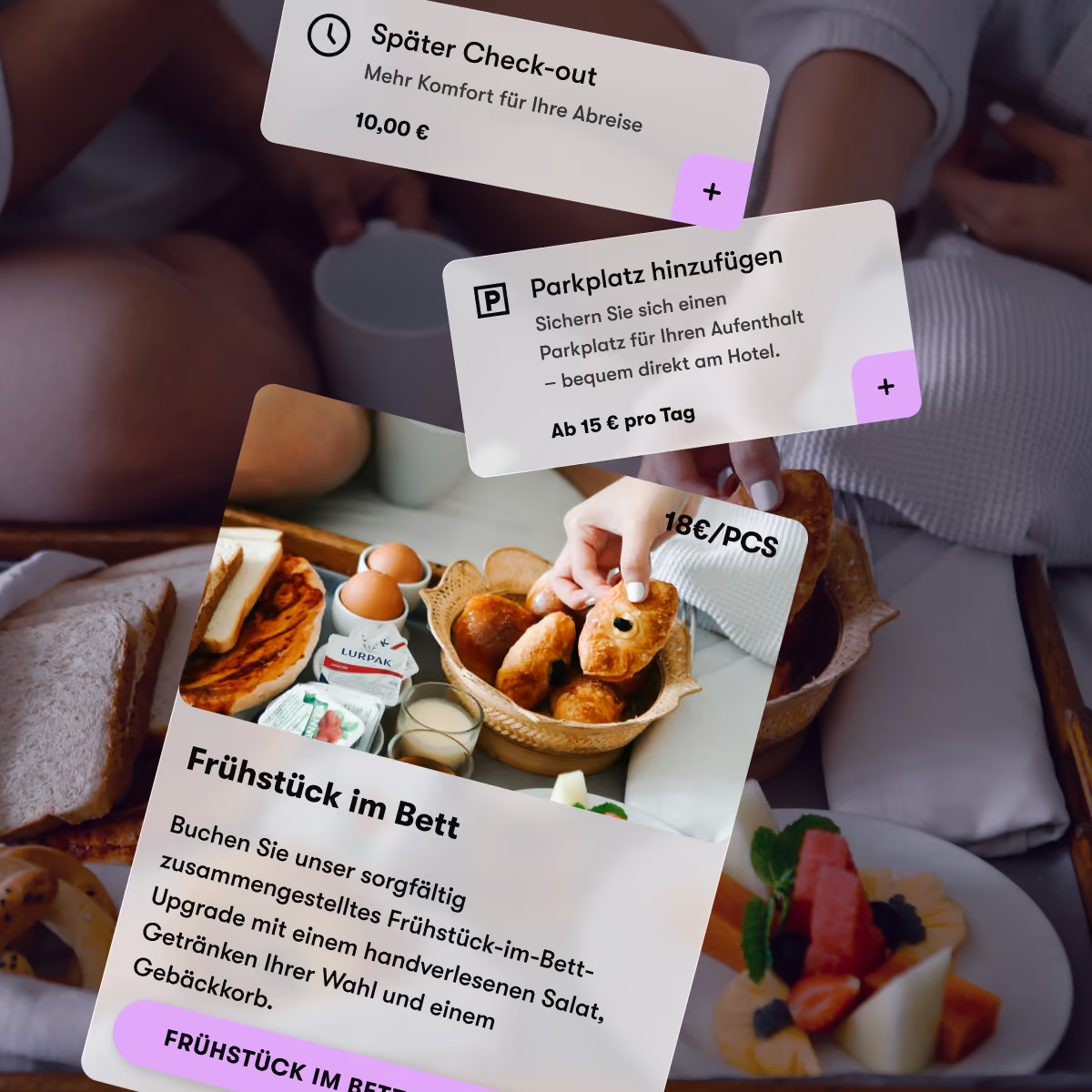
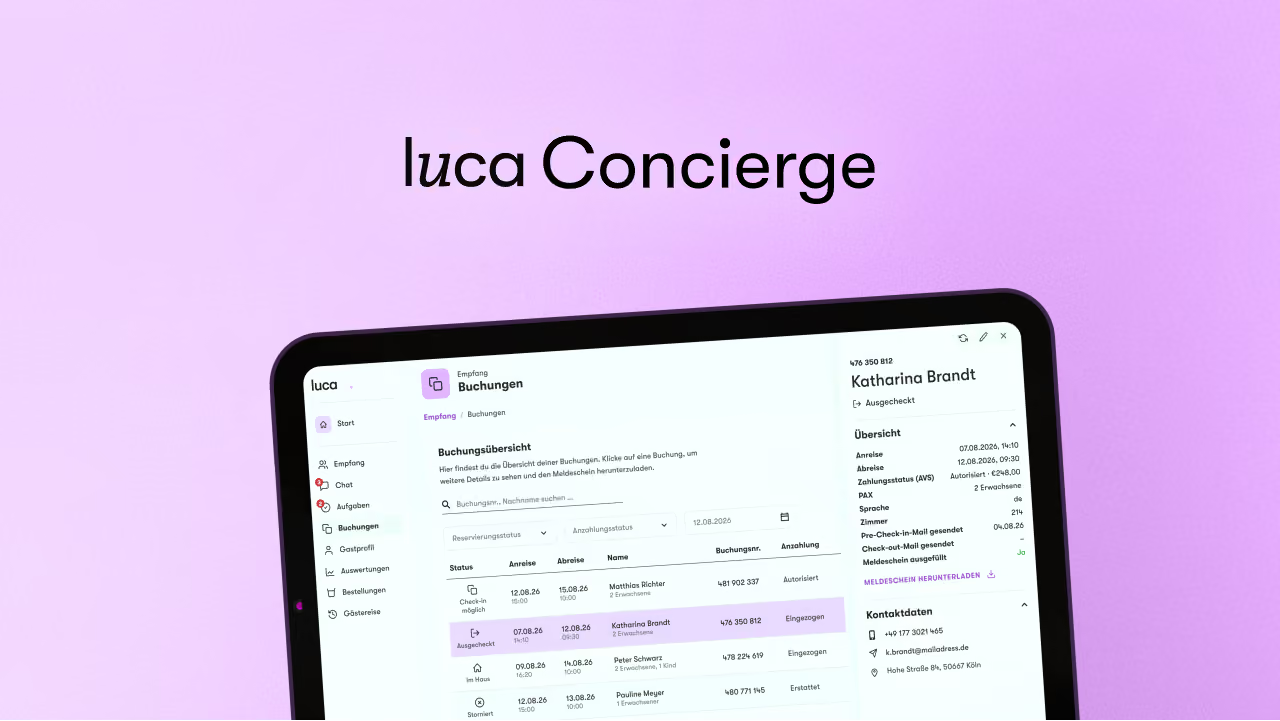
luca is a German guest experience platform for hotels, restaurants, and events. It covers the entire journey: from pre-arrival and check-in through the digital concierge and upselling to check-out. Everything is web-based via QR code, with no app download required. The difference compared to most providers lies in the combination: native payment with luca Pay (powered by Adyen, under 1% on all cards, no subscription), an integrated restaurant POS and the full guest journey, supported by a team based in the DACH region.
Two practical examples: The Vienna House by Wyndham Andel's Berlin, with over 550 rooms, uses the entire stack. The Isla Brown Corinthia Resort used luca to create 180 additional order points and generated €12,500 in additional revenue in one month.
Best for: Hotels and restaurants in the DACH region that want payment, POS, and the guest journey in one system.
Duve
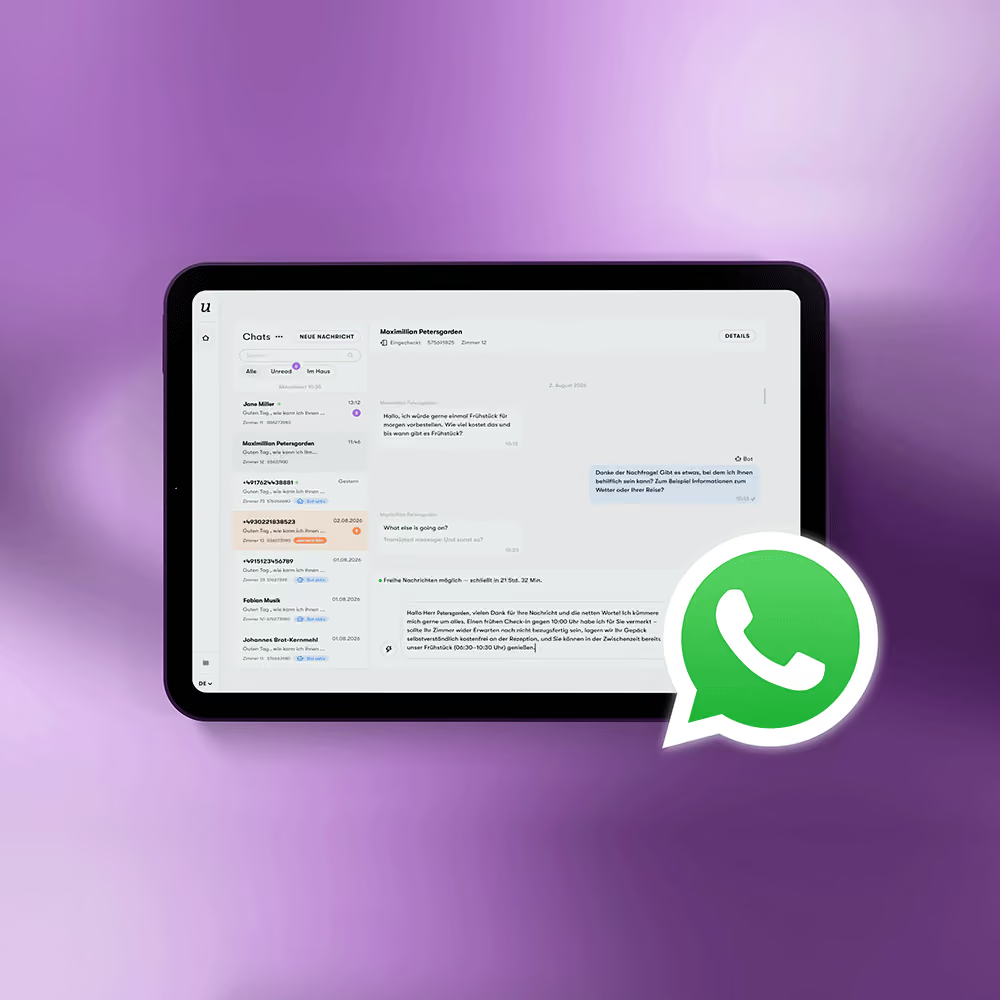
Duve, based in Tel Aviv, is a broad guest experience suite with strong design and a unified inbox for WhatsApp, SMS, email, and OTA messages. Its AI (DuveAI) automatically answers guest messages, and upsells are delivered in a data-driven way. Payments are handled via integrations like Adyen and Stripe; there is no native restaurant POS.
Best for: international hotels and vacation rentals looking for a design-focused journey and multi-channel communication. More in the luca vs. Duve comparison.
Straiv
Straiv (formerly CODE2ORDER), based in Stuttgart, is at home in the DACH region just like luca and covers the journey from check-in to check-out, including digital registration forms compliant with German law. The platform is modular: you start with one module and expand later. There is no native restaurant POS, and payments are handled via partners.
Best for: DACH hotels that want a modular guest journey with registration forms and do not need a POS. Details in the luca vs. Straiv comparison.
Canary Technologies
Canary, from San Francisco, offers a wide range of features: check-in, kiosk, upselling, departures, sales & catering, and native payments. AI features like AI Voice and Agent Studio are at the heart of their marketing, and Canary won in several categories at the 2026 HotelTechAwards. There is no native restaurant POS, and the focus is on large, global chains.
Best for: large hotel groups with a high demand for AI and payments. More in the comparison of luca vs. Canary.
SuitePad
Berlin-based SuitePad uses a different model: a fixed tablet in every room instead of a guest journey on the guest's smartphone. Usage during the stay is high, and the pricing model is performance-based, with no hardware or setup fees. There is no online check-in, mobile key, or restaurant POS; orders are charged directly to the room folio.
Best for: hotels that rely on a fixed in-room tablet with high usage during the stay. Details in the comparison of luca vs. SuitePad.
Betterspace (better.guest)
Kassel-based Betterspace focuses primarily on better.energy, an IoT heating control system designed to improve energy efficiency. Their digital guest directory, better.guest, is a secondary product. Payment, POS, check-in, and native key features are not included, and chat is only available via integration.
Best for: Properties that primarily want to save energy and are looking for a digital guest directory to go with it. More in the luca vs. Betterspace comparison.
Gastfreund
Kempten-based Gastfreund claims to operate the most widely used guest app in the German-speaking region, with over 7,000 properties and a secondary focus on clinics and care facilities. The platform is modular, featuring a shared data pool and the Hotelboard for communication between guests and staff. Integrated payment, POS, and online check-in are not available; digital keys are handled via Salto.
Best for: DACH-region hotels and clinics that want a guest app combined with team communication. Details in the luca vs. Gastfreund comparison.
HiJiffy
Lisbon-based HiJiffy is a guest communications hub with powerful conversational AI for web chat, WhatsApp, and email. The AI is designed to automatically answer standard questions, while check-in is handled via forms and the PMS. POS, integrated payment providers, in-room guest directories, and kiosks are not included.
Best for: Hotels that specifically want to automate their chat and WhatsApp communication. More in the luca vs. HiJiffy comparison.
DialogShift
Berlin-based DialogShift positions itself as the German market leader for AI in guest communication, with clients such as Motel One and Althoff. At its core is an AI chat based on a central knowledge database; other modules like Phone AI and Journey Messaging are partially marked as "coming soon." Payment, POS, check-in, and guest directories are not included.
Best for: DACH-region hotels focusing on AI-supported guest communication. Details in the luca vs. DialogShift comparison.
Hotelbird
Munich-based Hotelbird has been automating hotel processes for over ten years, offering online check-in, wallet keys for Apple and Google Wallet, PSP integration, and upselling, with clients such as Motel One. Their PMS integration is considered a key strength. There is no restaurant POS, and the digital guest directory is more streamlined than those offered by dedicated concierge providers.
Best for: DACH chains focusing on check-in automation and deep PMS integration. More in the luca vs. Hotelbird comparison.
LIKE MAGIC
Zurich-based LIKE MAGIC combines the guest journey and hotel operations into a modern, open platform, born out of the hotel operations of the Swiss SV Group. Features include check-in, digital keys, payment via integrations, upselling, and a messaging hub, plus an operations layer for the team. There is no restaurant POS.
Best for: DACH hotels looking for a one-stop solution for the guest journey and operations. Details in the luca vs. LIKE MAGIC comparison.
Operto
Vancouver-based Operto comes from the vacation rental sector. Its focus is on automating operations and housekeeping (Operto Teams) and keyless entry using smart lock hardware. Guests receive guidebooks, messaging, upsells, and app-free check-in. Native payment processing and restaurant POS are missing, and the journey is spread across several individual products.
Best for: vacation rentals and hotels with a focus on housekeeping and access. More in the luca vs. Operto comparison.
Chekin
Seville-based Chekin specializes in check-in and reporting: automatic guest registration with authorities in many countries, biometric ID verification, and automatic tourist tax collection. Payments cover reservations, upsells, and taxes; there is no restaurant POS or digital guest directory. The focus is on short-term rentals, though hotels are also supported.
Best for: short-term rental hosts and operators in multiple countries with a focus on reporting. Details in the luca vs. Chekin comparison.
How to run a clean selection process
Three steps to protect yourself from bad investments and feature lists that don't add value in day-to-day operations.
1. Shortlist three providers. Filter the overview based on your two most important criteria, usually journey coverage as well as payment and POS. A DACH hotel with a restaurant will have different options than an international vacation rental operator. Three providers are enough for a fair comparison.
2. Demo with a checklist. Have them show you your own workflow during the demo, not the standard presentation. Ask specific questions: connection to your PMS, registration forms according to German law, payment and POS in the same system, support language, and pricing model. Note every answer so you can compare the three providers directly afterward.
3. Run a pilot in one area. Start small, for example with the online check-in or the digital guest directory in one property or on one floor. Measure how many guests check in beforehand, how much time the front desk saves, and how much upsell revenue is generated. After two to four weeks, you will know if the platform delivers on the promises made in the demo. You can read about what belongs in a good guest directory in our buying guide for digital guest directories.
How long does implementation take?
That depends on the scope and the integration with your PMS. A single module like check-in or the digital guest directory is often live in less than a week. The full stack across multiple properties takes longer, which is why starting with a pilot is worthwhile. At luca, the benchmark for getting started is less than a week.