What a hotel self-service kiosk takes care of
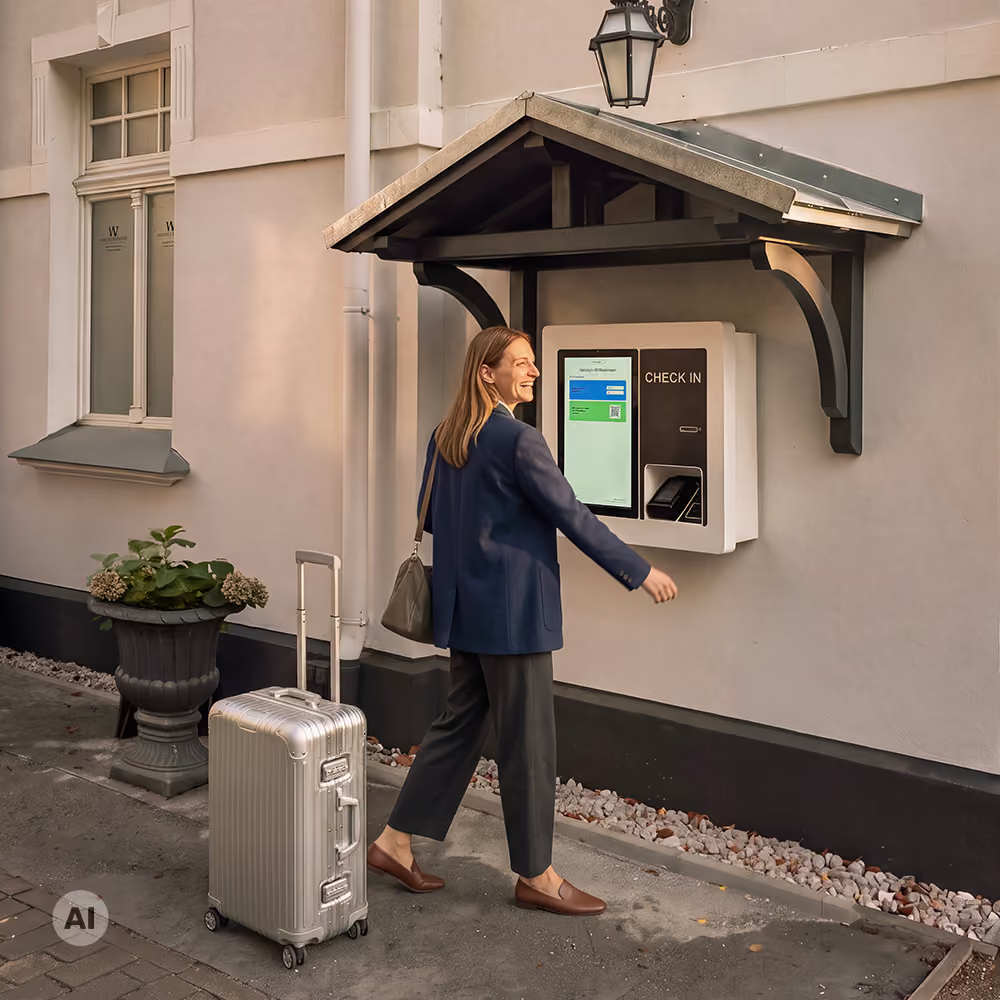
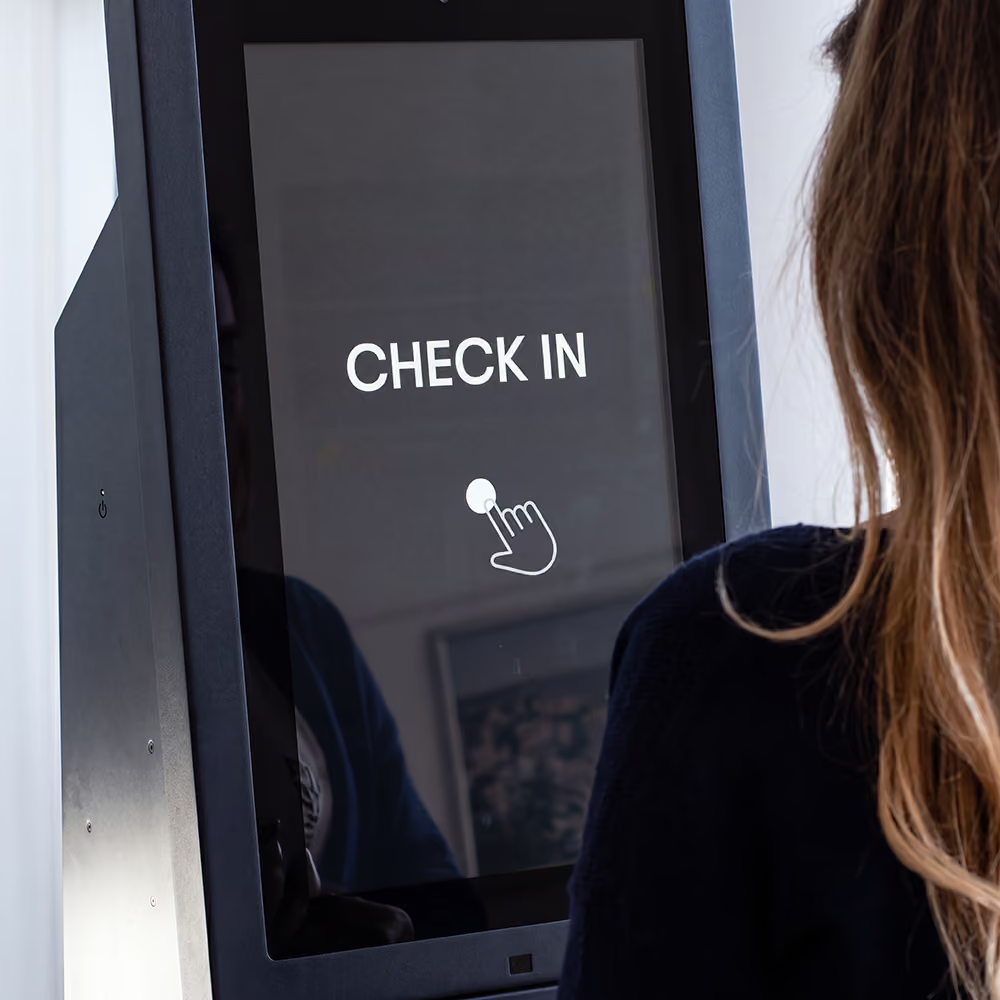
A hotel self-service kiosk is a terminal in the lobby where guests check themselves in, enter their details, pay and receive their room key. It takes routine tasks off the front desk and clears the queue at peak arrival time.
What a hotel self-service kiosk takes care of
Between 3 pm and 6 pm, most arrivals turn up almost at the same time – and that is exactly when the front desk is most thinly staffed. This article shows you what a check-in kiosk takes over, why the hybrid model of kiosk plus smartphone works in practice, and how it helps you cover late-night arrivals and staff shortages. At the end you'll find a decision table and a real-life example from a hotel with more than 550 rooms.
Key takeaways
- A kiosk handles check-in, check-out, data capture, payment and key issuing. It is installed in a day and works around the clock without additional staff.
- The realistic setup is hybrid: some guests pre-check in on their smartphone, while walk-ins and last-minute guests use the kiosk.
- With luca, up to 69 percent of guests complete check-in in advance, and check-in time drops by up to 80 percent.
- A 24/7 self-service shop can be connected to the same terminal: drinks and snacks with contactless payment and age verification.
- The kiosk does not replace the front desk. It takes over the repetitive tasks so your team has time for real guest questions.
Why the queue builds up at 3 pm
Most hotels set check-in at 3 pm, and most guests arrive shortly afterwards. This creates an arrival wave that piles up within a few hours. A simple example makes it tangible.
Say a 100-room hotel has around 70 arrivals on a busy day. If half of them arrive between 3 pm and 5 pm, that's about 35 guests in two hours. The following calculation is illustrative: at roughly four minutes per manual check-in, one person at the desk can handle around 15 guests per hour.
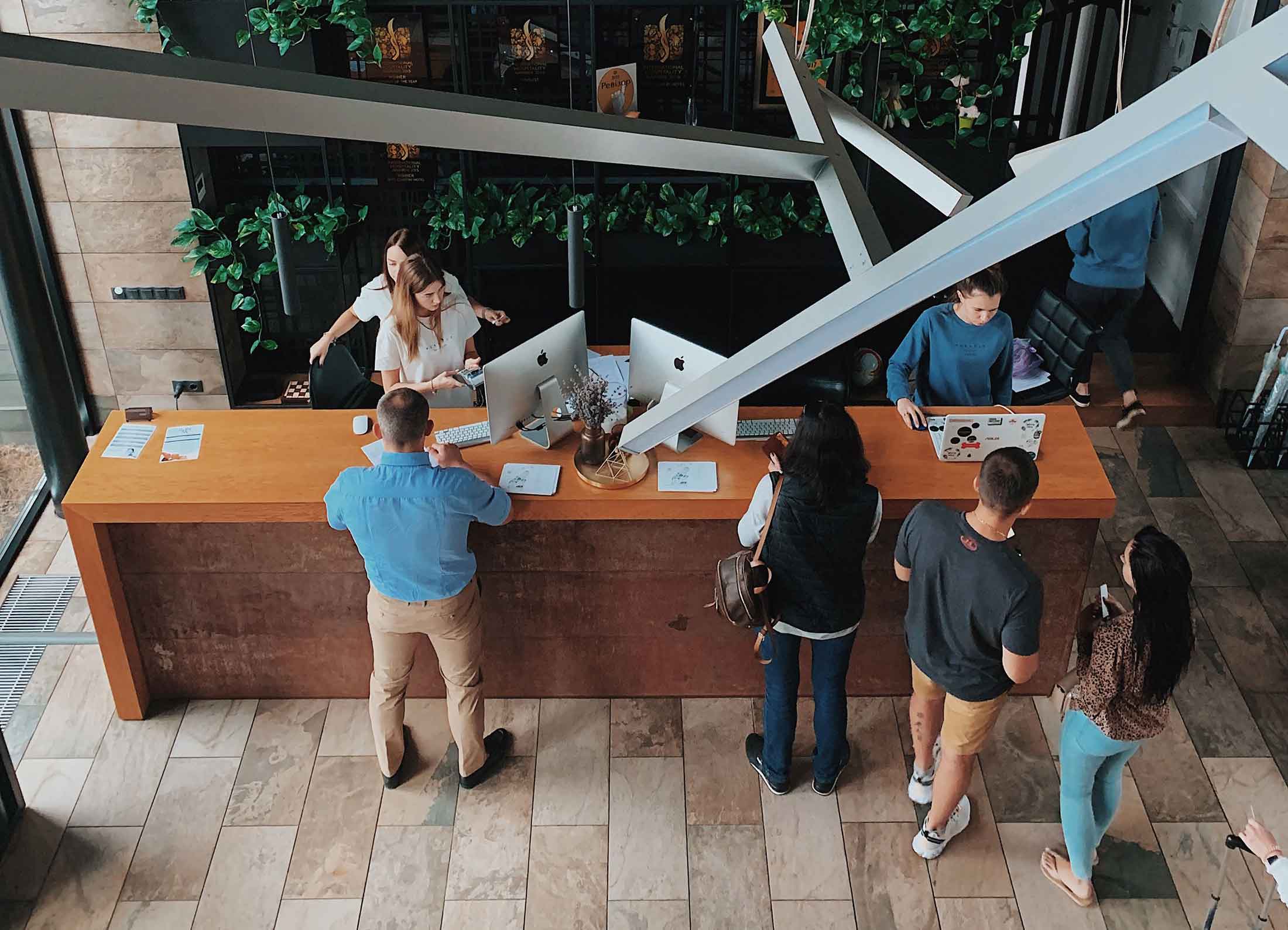
If only one person is behind the desk at peak time, the last guest in the wave can easily wait 15 to 20 minutes. Every front desk knows this pattern. A kiosk running in parallel to the desk absorbs part of the wave – without an extra shift.
Staff shortages remain the underlying pressure
The arrival wave would be easier to handle if there were always enough staff. That is rarely the case. In October 2025, 27.9 percent of accommodation businesses in Germany were affected by a shortage of skilled workers (ifo business survey, reported by tageskarte.io, November 2025), down from 46.5 percent in the second quarter of 2024.
The pressure is easing, but it hasn't gone away. For many hotels, this means the front desk is thinly staffed at off-peak times and every minute at the desk counts. A kiosk that handles standard check-ins gives your team exactly those minutes back.
What a check-in kiosk takes over
A kiosk is your digital front desk. It covers the tasks that still tie up time at the desk today:
- Check-in and check-out: the guest identifies their booking, confirms their details and completes the process.
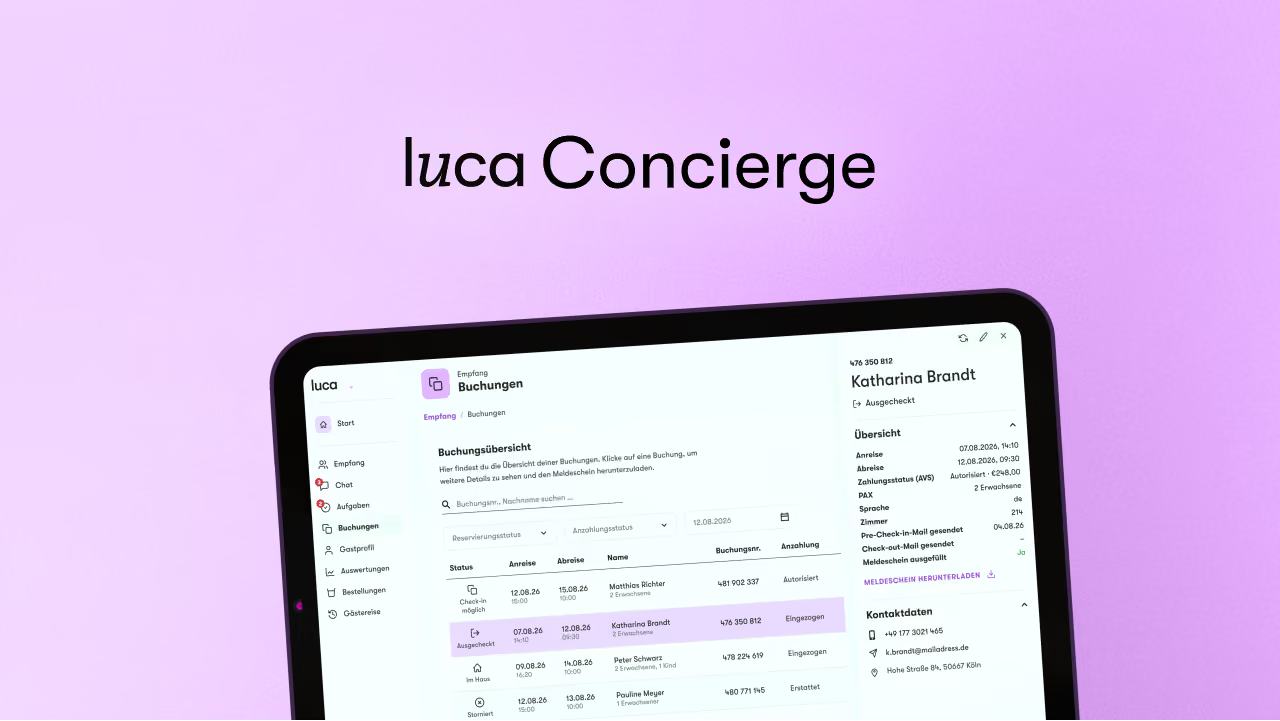
- Data capture: registration details and payment methods are entered at the terminal and transferred to your existing PMS – no double entry.
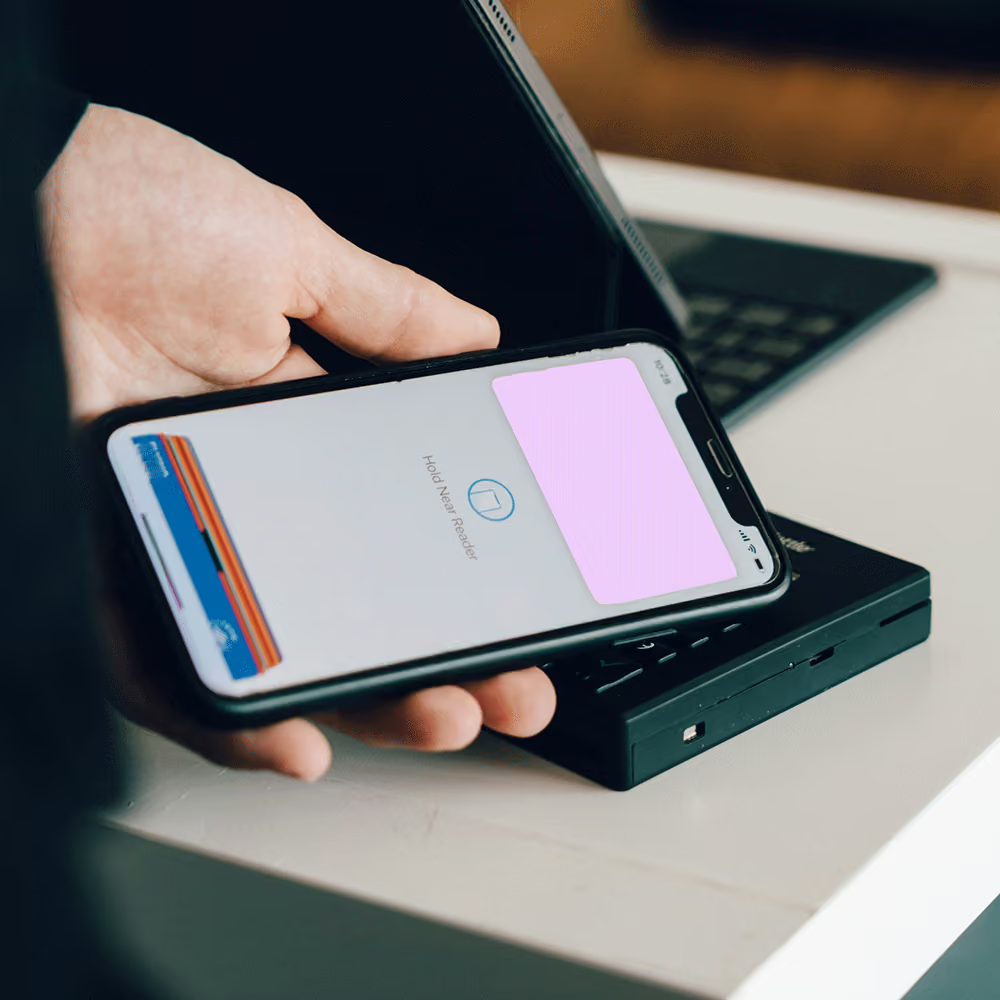
- Payment: contactless, directly on the device, powered by Adyen.
- Key issuing: the kiosk dispenses the key card, or the guest opens the door with their smartphone.
The kiosk is installed in a day, needs no additional staff and runs around the clock. luca supports you from the first idea to the fully set-up terminal.
You'll find more details on the features on our self-service kiosk page. If you want to understand the smartphone flow as well, read our guide to online check-in.
Kiosk and smartphone: the hybrid model that works
A kiosk on its own only moves the queue from a person to a device. The stable solution combines two channels. Some guests complete pre-check-in on their own smartphone before they arrive. Walk-ins, passing guests and anyone who hasn't prepared use the kiosk on site.
This spreads the load: guests who checked in beforehand just pick up their key at the terminal. With luca, up to 69 percent of guests check in in advance, and check-in time drops by up to 80 percent. That eases the 3 pm wave from both ends.
- Staffed front desk only: Costs: high staff costs, especially at off-peak times. Guest waiting time: rises sharply during the arrival wave. Night coverage: only with a night shift. Personal contact: always, but slow when busy.
- Kiosk only: Costs: equipment instead of staff costs. Guest waiting time: short, as long as there are enough terminals. Night coverage: around the clock. Personal contact: low, no one on site to talk to.
- Hybrid (kiosk plus smartphone): Costs: staff deployed at peak times, kiosk for the rest. Guest waiting time: shortest, load is spread. Night coverage: around the clock. Personal contact: team free for real questions.
The hybrid model wins in almost every column because it uses staff and technology where they make the most sense. Details on the process are on our check-in and check-out page.
Late-night arrivals and lean front-desk models
Late arrivals are the classic reason for a night shift. A train arrives at 11 pm, a flight is delayed, a guest is standing in the lobby at midnight. Without a kiosk, you need a night shift just in case.
With a terminal, guests check in themselves and receive their key, no matter how late it is. This makes lean front-desk models possible: the desk is staffed during core hours, and the kiosk takes over at off-peak times. Smaller hotels can save an entire shift, while larger ones can deploy their night staff more effectively.
The 24/7 self-service shop as an extra revenue stream
The same terminal principle supports a second use case: a small self-service shop in the lobby. Drinks, snacks and travel essentials, available around the clock, with contactless payment and automatic age verification for alcohol.
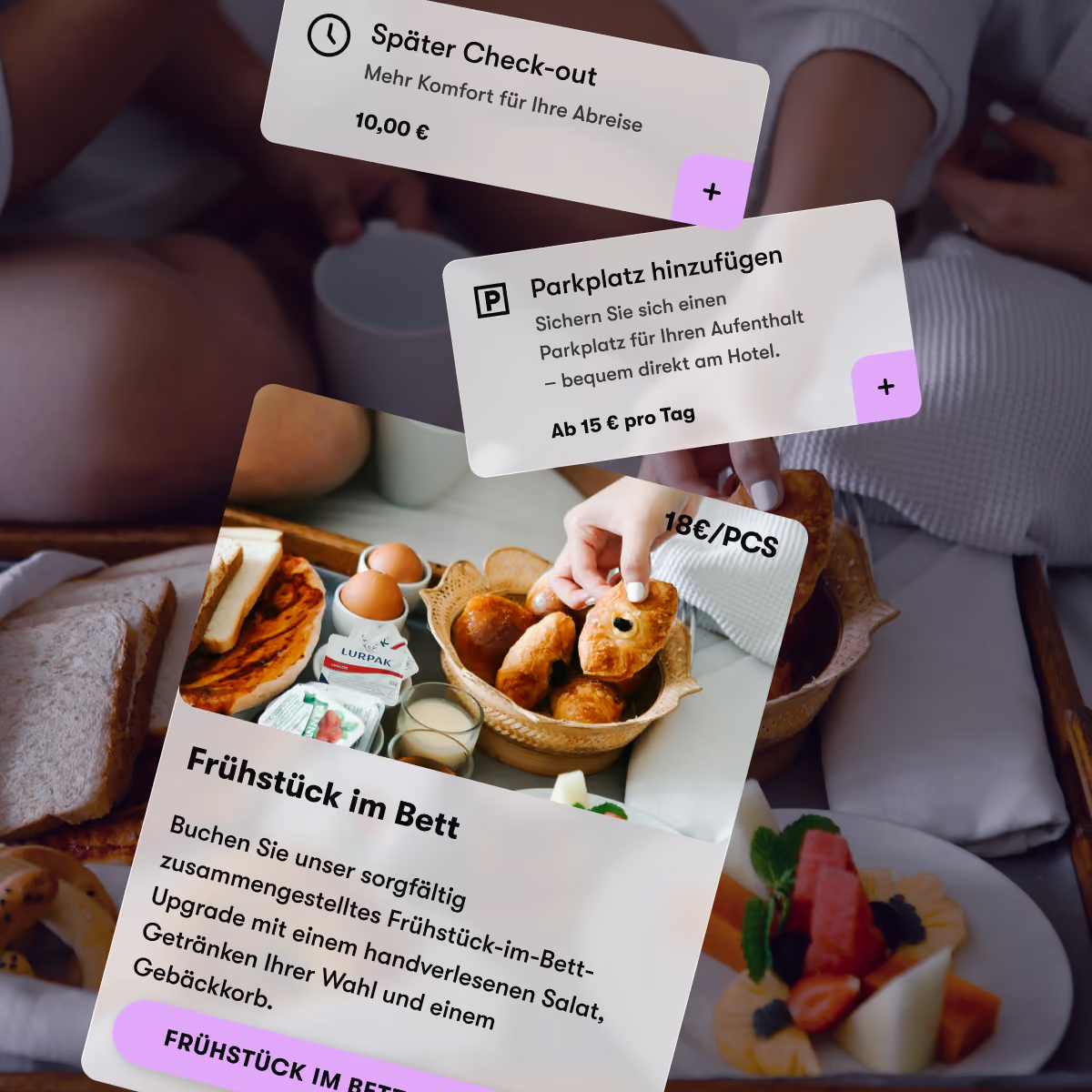
Compared with a classic minibar, this has real advantages. You restock in one central place instead of in every room. That saves working time and makes room for a larger range of products. luca helps from the initial concept to fully stocked shelves, including finding the right partners. You can also present offers along the guest journey – see upselling.
Case study: Vienna House by Wyndham Andel's Berlin
With more than 550 rooms, Vienna House by Wyndham Andel's Berlin is one of Germany's largest business and conference hotels. The hotel uses the full luca stack, and check-in takes seconds – on the smartphone or at the lobby terminals with key issuing.
On top of that come integrated payments with automatically sent invoices, a 24/7 digital concierge and a self-service shop in the lobby with contactless payment and age verification. The hotel describes the result as significantly higher efficiency, shorter onboarding times for new staff and a consistent process across the group. That is the hybrid model at the scale of a large hotel.
How much space and power does a terminal need?
A kiosk stands on a small footprint in the lobby and needs a standard power socket and a network connection. Installation is done in a day, and luca supports you with positioning and setup.