BLOG
>
ARTICLE
Digital tipping: How it works with card payments
How tips via terminal and QR code reach your team
July 14, 2026
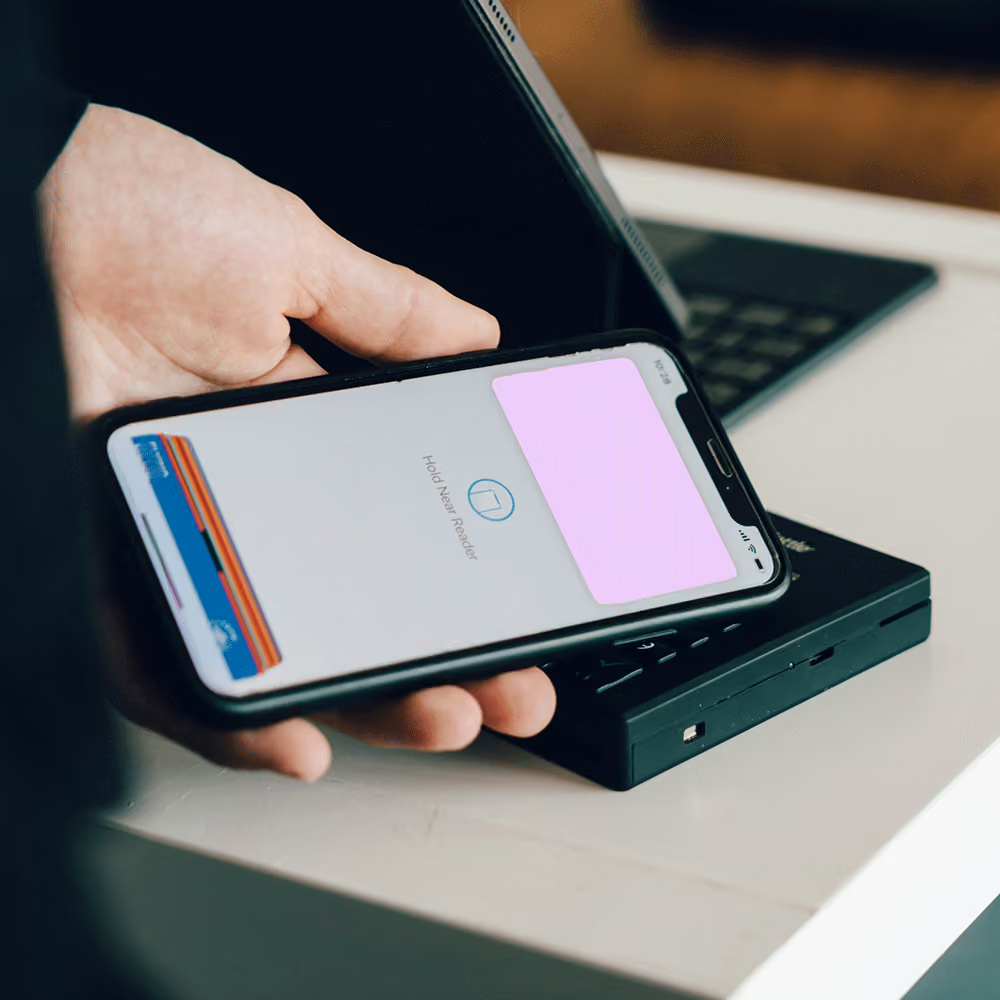
How tips via terminal and QR code reach your team
Digital tipping is a tip that your guests leave when paying by card or QR code. It is usually done via a percentage suggestion directly on the terminal or on their own mobile phone. It reaches your team just like cash and remains tax-free under the same conditions.
According to the Bundesbank, the share of cash payments in Germany has fallen from 58 percent (2021) to 51 percent (2023). Those who don't have cash on them don't leave a tip. This article shows you how digital tipping works at the terminal and via QR code, what the tax rules are, and what this means for your team's satisfaction.
The Bundesbank has been tracking payment behavior in Germany since 2008. In the 2023 study, only half of all transactions were paid with notes and coins. The share of cash fell from 58 percent in 2021 to 51 percent.
Debit cards accounted for 27 percent of all payment transactions. Mobile payments via smartphone or smartwatch have tripled to 6 percent since 2021. The trend is clear.
For your restaurant or hotel, this means more and more guests are at the table or reception without cash. They would like to tip, but don't have any bills on them. If you have already introduced card payments, the final step for tipping is often still missing. You can find more about card payments on the luca Pay page.
Without a digital tipping prompt, one of two things usually happens: the guest pays the bill by card and leaves no tip, or they rummage around for change they don't have.
In both cases, your team loses out on money the guest actually intended to give. For a service team that relies on tips for a significant portion of their income, this adds up over the course of a month. This is exactly where digital tipping comes in: it introduces the tipping prompt at the exact moment the guest is already paying.
The process is similar for both payment methods. The guest sees the bill amount and is prompted to leave a tip. They tap a percentage or enter a custom amount and confirm. The total amount is charged, and the tip is recorded.
On the card terminal , the prompt appears on the display as soon as the amount is set. You define the suggestions yourself, for example 5, 10, and 15 percent, plus an option for a custom amount. The guest decides with a tap, then holds their card or phone to the device. luca terminals run on Adyen and start at €19 per month.
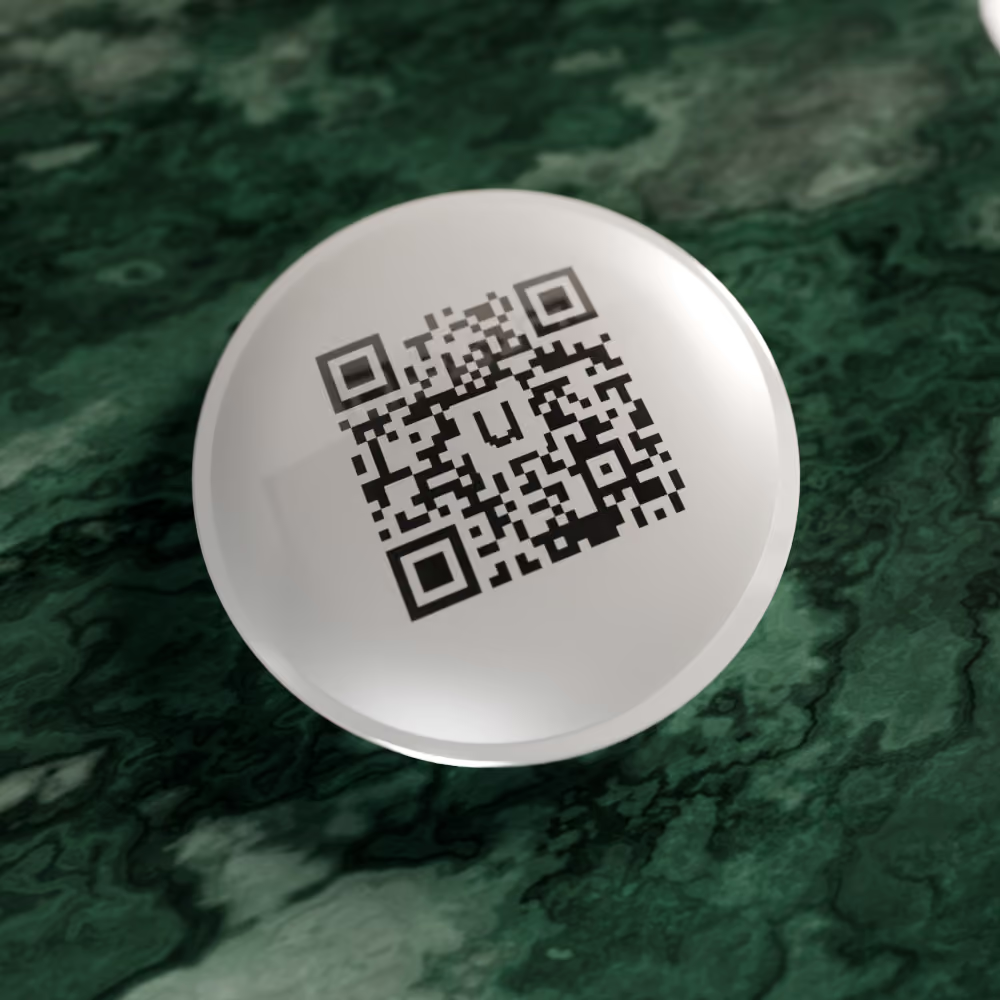
With QR code payment , the guest scans a code at the table and opens their bill in the browser, with no app download required. Before paying, the same tipping step appears with suggestions. Guests can even split the bill and each leave their own tip. This is how luca's QR code paymentworks.
The difference for your team: the guest decides for themselves in peace, without anyone standing right there at the table. This removes the awkwardness many people feel when asked directly.
The three common methods differ primarily in whether tipping is possible without cash and how much extra work it creates for your team.
Tips from guests to your staff are tax-free in Germany. This is based on Section 3 No. 51 of the Income Tax Act (EStG). It remains tax-free if it is paid voluntarily, comes from the guest, is paid in addition to the bill, and there is no legal entitlement to it.
Whether the guest pays in cash or by card does not fundamentally change this. The decisive factor is that the money comes from the guest and reaches the team. The Federal Fiscal Court has also confirmed that pooled tips distributed later can remain tax-free as long as they are intended exclusively for the employees.
With card tips, the amount first arrives in the business account and is then paid out to the team. It is best to clarify how to document and pay this out properly with your tax advisor. The rules on tax exemption are discussed regularly, so it is worth checking the current status.
For many in the service industry, tips are a fixed part of their income. If this disappears because guests do not carry cash, it directly affects the people at the table. A digital tipping step keeps this income stable, even if hardly anyone pays with cash anymore.
This affects team morale. Those who see that good work continues to be rewarded are more likely to stay. In an industry with a staff shortage, this is a strong point in job interviews. Transparent and fair handling of digital tips is part of a good workplace in the hospitality industry today.
The impact of digital payment methods is also evident in revenue figures. Isla Brown Corinthia, a 165-room resort in the Curio Collection by Hilton, created 180 additional ordering points via QR codes at the pool, beach, and rooftop, generating €12,500 in additional F&B revenue in a single month. Digital channels encourage guests to order and pay exactly where they are.
Tips belong to your team. With card payments, the amount is first deposited into the business account and then paid out to employees, either individually or via a shared pool. It is important that the money goes exclusively to the team; otherwise, the tax-free status is void.
Sources: Deutsche Bundesbank, Payment Behavior in Germany 2023 · Section 3 No. 51 of the German Income Tax Act (EStG)
Tips from guests to your employees are tax-free under Section 3 No. 51 of the German Income Tax Act (EStG), regardless of whether they are paid in cash or by card. The requirement is that they are paid voluntarily, are in addition to the bill, and go directly to the team. Please consult your tax advisor regarding correct documentation and payout procedures.
Without a prompt, many cashless guests don't tip at all because they don't have cash on hand. With pre-set percentages at the moment of payment, the decision becomes easy. This ensures that tipping remains a standard practice, even as cash usage declines.
The tipping prompt is part of the payment process at the terminal or via QR code. You set the suggested percentages once, and the prompt will then appear automatically with every payment. luca terminals start at €19 per month, while luca Pay has no subscription fees and charges a card processing fee of less than 1 percent.





.png)


