BLOG
>
ARTICLE
Paying by QR code in restaurants: how it works in 2026
Guests scan at the table, split the bill, add a tip, and pay themselves
July 14, 2026
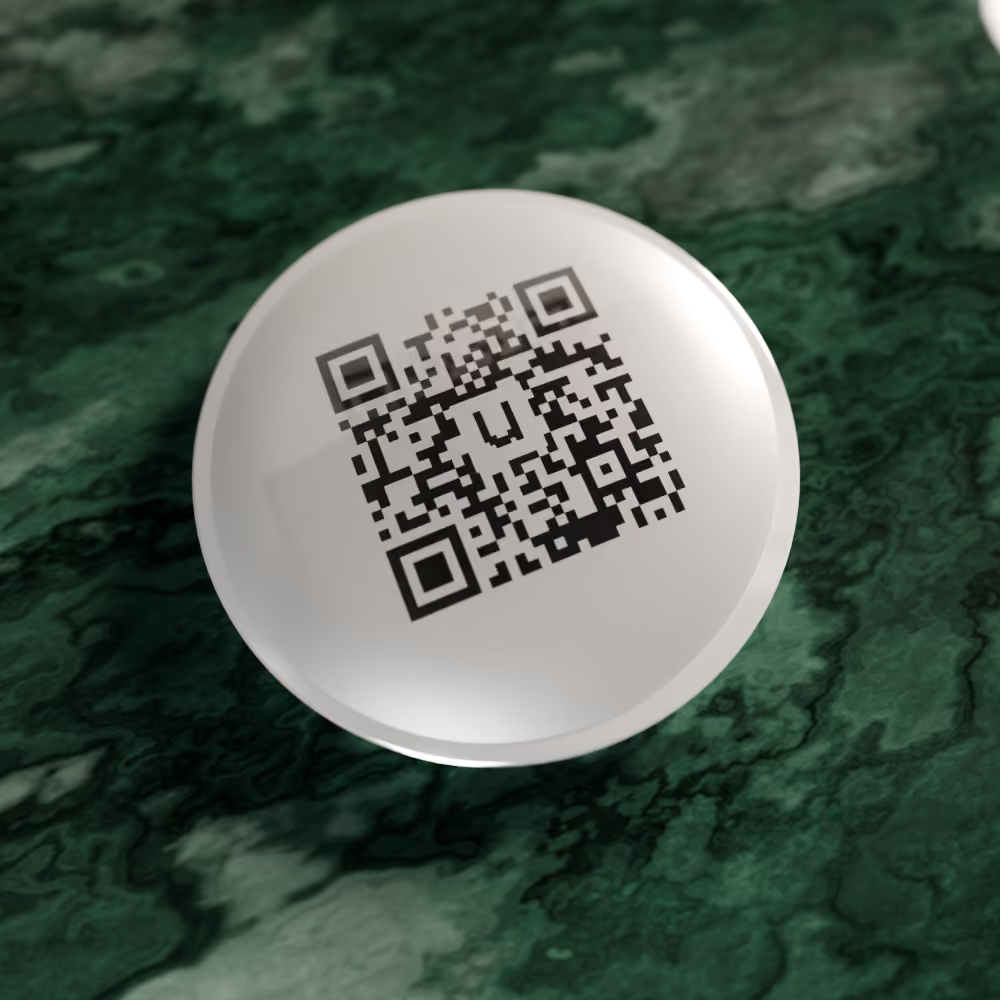
Guests scan at the table, split the bill, add a tip, and pay themselves
Paying by QR code in a restaurant means guests scan a code at their table, view their bill on their own phone, split the amount if needed, add a tip, and pay. A server no longer needs to come to the table to process the payment. The longest wait time in a restaurant often occurs right at the end, when guests have finished their meal and are just waiting for the check.
In this article, we show you step-by-step how QR code payment at the table works. You will learn how it affects table turnover, tipping, and your team's workload. You will also see when a classic terminal remains the better choice.
The process takes only a few seconds for the guest. No app or customer account is required. The guest simply uses their smartphone camera.
The entire process is handled via luca QR code payment. Payments are processed through luca Pay, powered by Adyen, with a fee of less than 1% on all cards and no subscription required.
During peak hours, the bottleneck usually happens right at the end, when it's time to pay. A table signals they are ready to settle up. The server takes the request, gets the terminal, returns to the table, and processes the payment. When the house is full, this process repeats dozens of times an hour.
For the guest, waiting for the bill feels longer than any other part of the visit. The evening was great, but the final impression is one of waiting. This is exactly where QR code payment comes in: guests pay as soon as they are ready, without having to wait for a free moment from the service staff.
The Berlin restaurant dandelion uses smart processes to handle the lunch rush. When many tables want to pay at the same time during the lunch hour, speed at the end determines when the next guest can be seated.
The following calculation is an illustrative model, not a luca metric. It shows how minutes saved at the table add up.
Assume a table is occupied for an average of 8 minutes during the payment process. The guest signals, the server arrives, retrieves the terminal, and processes the payment. If this time is reduced to 2 minutes via QR payment, you save 6 minutes per table. With 40 tables in an evening, that’s 240 minutes.
That equals four hours of free table time spread throughout the evening. During peak hours, this is enough for several additional table turnovers at high-demand tables. Every earlier table turnover is additional revenue you would otherwise lose at the door.
Splitting the bill is the most time-consuming step for service staff. Four people, three cards, one paying cash: this is where it gets complicated for any server. With their phones, guests handle it among themselves.
The amount can be split evenly or assigned to individual items. Everyone pays their share with their own card. The team no longer has to calculate, collect payment, or count change.
Tipping is also perfectly positioned. The tipping step comes right before payment, with suggested amounts. The prompt reaches the guest at the right moment, just before they pay. You can read more about the legal framework for card payments in our article Card payment becomes mandatory.
When guests pay for themselves, your team's workload shifts. Time spent at the terminal is eliminated. This frees up time for what guests actually notice at the table: recommendations, refills, and attentive service.
luca is familiar with this principle from the ordering process. At the Isla Brown Corinthia Resort & Spa (Curio Collection by Hilton, 165 rooms), luca created 180 ordering points where guests order via QR code. Within one month, this generated €12,500 in additional F&B revenue. Scan-to-Order and Scan-to-Pay are the same motion: the guest takes action, and the team gains time.
Every payment method has its place. The table shows the differences in everyday operations.
QR payment isn't the first choice for every situation. In some cases, a dedicated device remains the more suitable solution.
For an older demographic that prefers familiar payment methods, a terminal provides peace of mind. At the bar, where transactions are quick and direct, reaching for a device is often more practical. And at events where staff are on the move, Tap to Pay turns your smartphone into a card reader.
The key is the combination. With luca Pay, you bundle QR codes, terminals, and Tap to Pay into one system, with fees under 1% and no subscription. This allows you to choose the right method for every table, bar, or event.
QR payment is an option, not a requirement. Those who prefer to pay the traditional way can continue to use a terminal or cash. In practice, both methods run in parallel, guest by guest.
Yes. Guests simply scan the code with their standard camera, and the bill opens in their browser. No downloads or customer accounts required.
With luca Pay, you pay less than 1% on all major cards, with no monthly subscription. Payments are powered by Adyen. Exact rates depend on your transaction volume, which we can discuss during a demo.
Yes. luca is designed to integrate with existing POS systems so that the correct bill appears at the table. This eliminates double entry and prevents outstanding balances.





.png)


