BLOG
>
ARTICLE
WhatsApp in hotels: Better guest communication via chat
Channel mix, AI responses, and GDPR basics for guest chat
July 14, 2026
Channel mix, AI responses, and GDPR basics for guest chat
Using WhatsApp in your hotel means reaching guests on the channel they already check every day. Pre-arrival questions, requests during their stay, and follow-ups for their next visit all come together in one chat. Around 76 percent of people in Germany use WhatsApp regularly (Statista, 2024). Your guests would much rather type a quick message than wait on hold.
This guide shows you which channel fits which moment and what AI can reliably answer. You’ll see how a message automatically becomes a task for housekeeping, and you’ll get the GDPR basics for using WhatsApp in your hotel.
A phone call forces both sides to be available at the exact same moment. The guest waits, and the front desk is interrupted from whatever they were doing. A message, on the other hand, waits patiently until someone has time to respond.
Guests are familiar with WhatsApp from their daily lives. They use it to message their family, their delivery services, and their doctors. Moving to a hotel chat feels natural and familiar to them.
For your team, the main benefit is reduced pressure. Ten messages can be handled between two check-ins. Ten phone calls tie up a staff member ten times over.
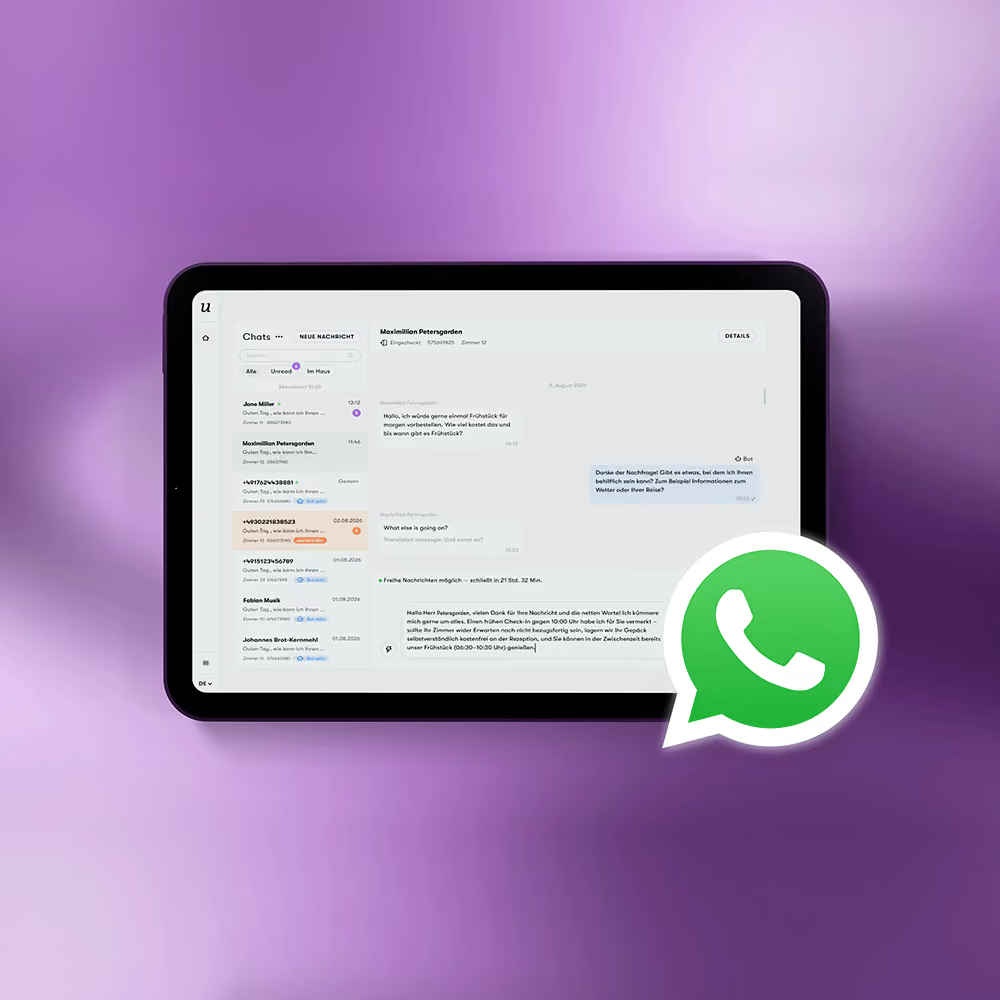
Want to see how it works in practice? luca Chat connects WhatsApp and email with AI-powered responses in one tool.
Every stage of the journey comes with its own set of questions. The right channel depends on how quickly a response is expected and how personal the request is.
Before arrival, planning questions dominate: directions, parking, early check-in, pets. These are short, clear questions, perfect for chat and AI. A direct line here noticeably reduces the number of calls on the day of arrival.
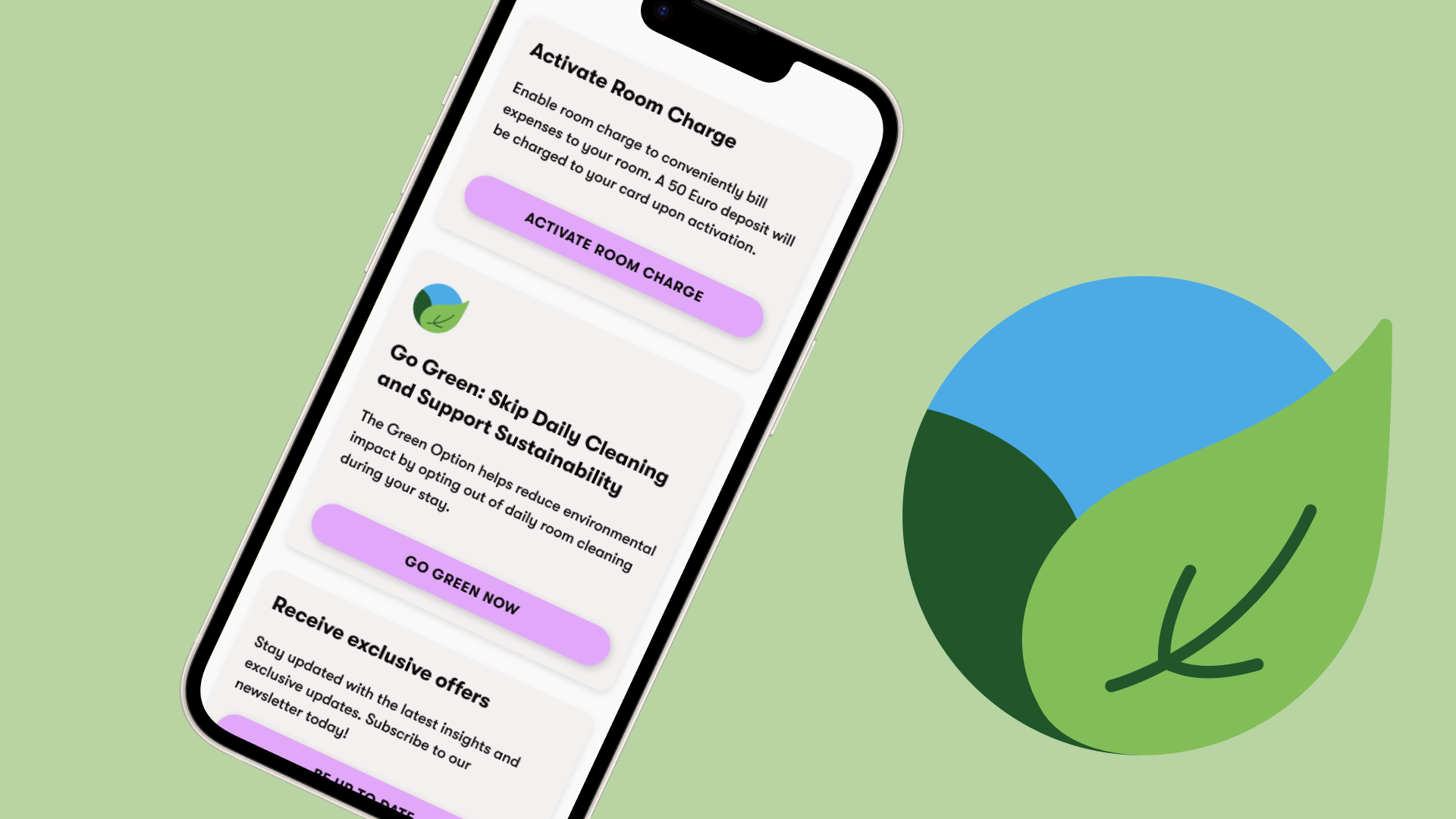
During the stay, it’s all about immediate needs: an extra pillow, a table for the evening, charging a bill to the room. Speed is key here, and guests are messaging from their room or the pool. Via the digital guest directory the chat lands directly on their smartphone, with no app download required.
After departure, the relationship-building begins. A quick thank-you message, an offer for their next stay, or a request for a review. The channel remains open, and staying in touch stays simple.
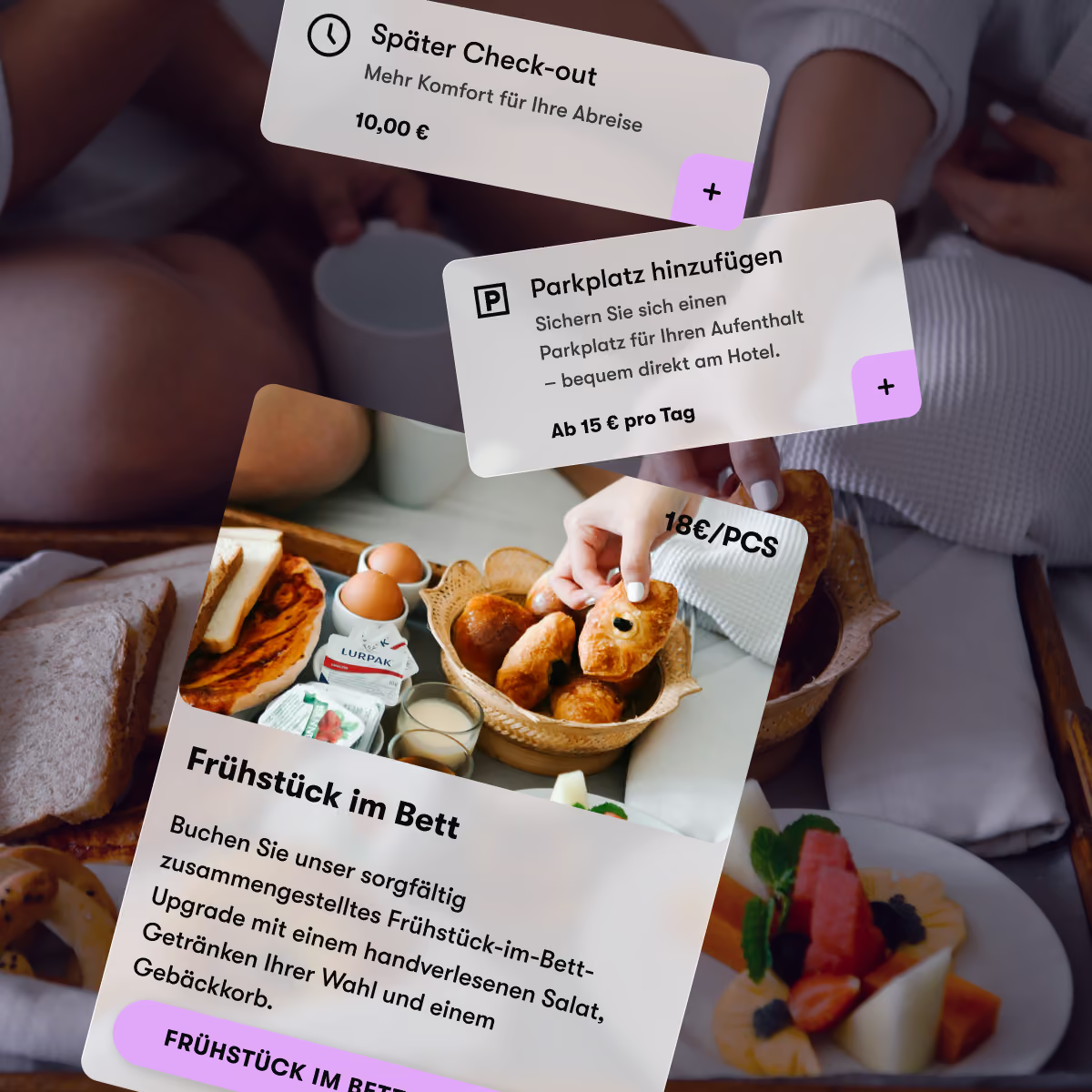
AI handles recurring questions with clear answers. Parking, breakfast times, Wi-Fi passwords, late check-out for an extra fee: these requests are processed around the clock without anyone needing to be at the front desk.
As soon as things get personal, your team takes over. A complaint, a special request for a celebration, or a complex booking issue: these require the intuition that only a human can provide. luca seamlessly hands these cases over to the reception team.
You can read about how luca fundamentally uses AI—following the principle that AI suggests and humans decide—in our article on AI solutions in the hotel industry. In short: the responsibility remains with your team.
The real time-saver lies in the follow-up. A guest message is only truly resolved once the right person takes action.
If a guest writes "I need two more towels," luca recognizes the request and creates a task for housekeeping. The message moves directly into the workflow. Your team sees the task, checks it off, and the guest receives a confirmation.
This eliminates the intermediate step of someone having to read, understand, and verbally pass on a message—a step that is often lost in the hustle and bustle.
Some information concerns all guests in the hotel at the same time. Broadcasts are perfect for this, allowing you to send short messages to an entire group.
Typical occasions include the restaurant opening an hour later, a weather warning for a hiking day, or an available table in the evening with a daily special. Spa offers or a drink of the day also fit this format perfectly. Guests receive the information directly on their phones instead of having to walk past a notice board.
Restraint is key. One relevant broadcast per day is effective. Five trivial messages will lead to guests muting the chat.
Using WhatsApp in a hotel depends entirely on having the right access. The standard private WhatsApp app on a reception phone does not meet business requirements. For professional use, you need the WhatsApp Business API.
With the Business API, communication runs through an authorized provider with whom you sign a data processing agreement. You obtain the guest's consent via an opt-in, for example, during the booking process or upon initial contact. This keeps the purpose of the channel transparent.
These points are a starting point, not legal advice. For binding implementation, please consult your data protection officer. luca uses the official Business API for chat to ensure your hotel is on the safe side.
Four channels, four profiles. The table shows which one is right for the job.
The phone remains essential for urgent and sensitive matters. For everything else, chat channels take the pressure off the front desk because messages are consolidated and can be partially answered automatically.
Multiple channels create a new problem: messages end up scattered. An email here, a WhatsApp there, chat history somewhere else.
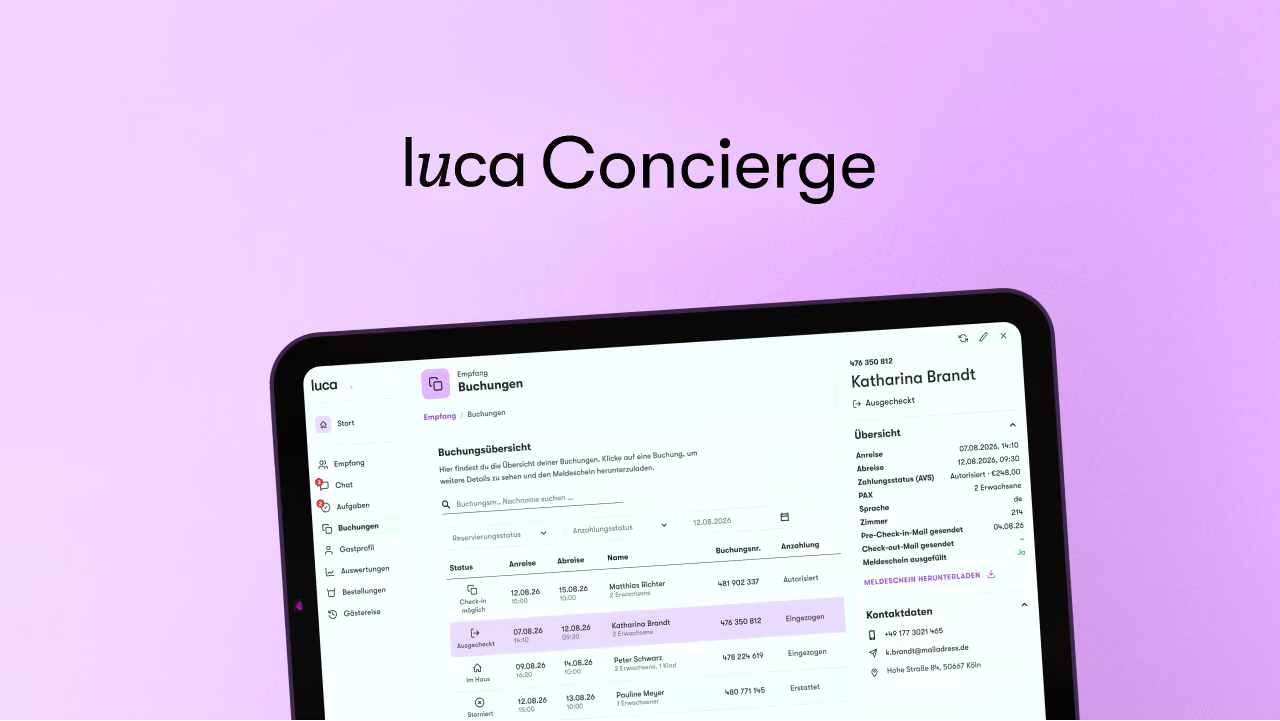
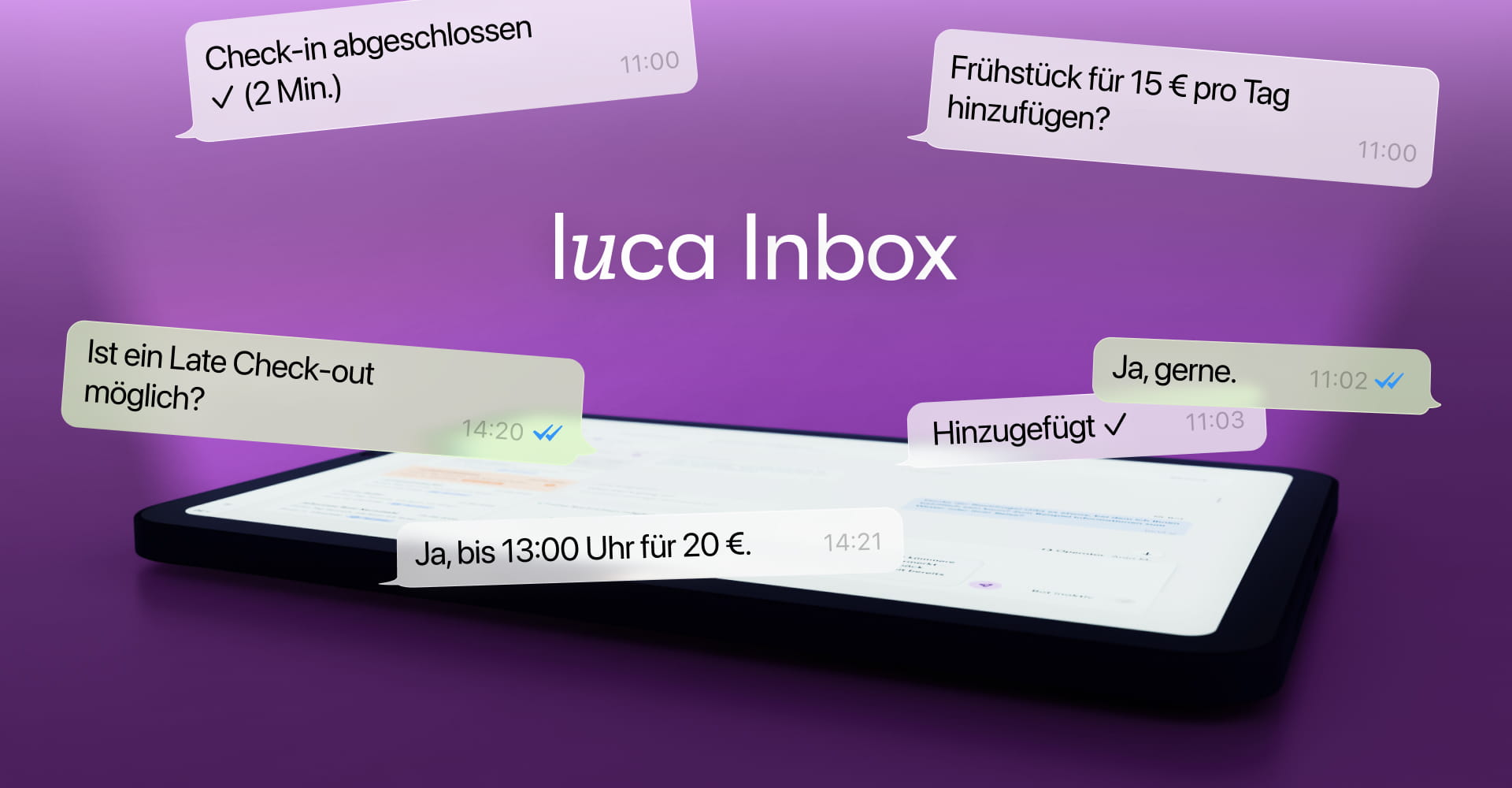
The luca Inbox solves this. Every written guest message, whether via email, WhatsApp, or AI chat, appears in a single, shared thread for each guest. Your team can reply directly without switching tools. The Inbox is integrated into the booking overview in luca Locations, with no separate login required.
This way, colleagues in the afternoon can see what was discussed in the morning. You can find more details in the article on the luca Inbox, published in July 2026.
luca Chat handles inquiries in multiple languages, allowing guests to write and read in their own language. This takes the pressure off the front desk when dealing with international guests. Standard questions are also handled outside of shift hours.
For professional use, you should use the WhatsApp Business API with a dedicated number for your property. The standard WhatsApp app on a work phone is not suitable for this purpose. luca sets up access via the official Business API.
Yes, when using the WhatsApp Business API, a data processing agreement, and guest consent via opt-in. The standard app does not meet these requirements. For binding implementation, please consult with your data protection officer.
With WhatsApp and web chat, guests expect responses in minutes, whereas with email, they expect them in hours. AI responses to standard questions are provided instantly, 24/7. luca forwards personal requests to your team, who can then respond during their shift hours.





.png)


