BLOG
>
ARTICLE
Reducing restaurant no-shows: 2026 practical guide
What an empty table costs and five measures that actually work
July 14, 2026
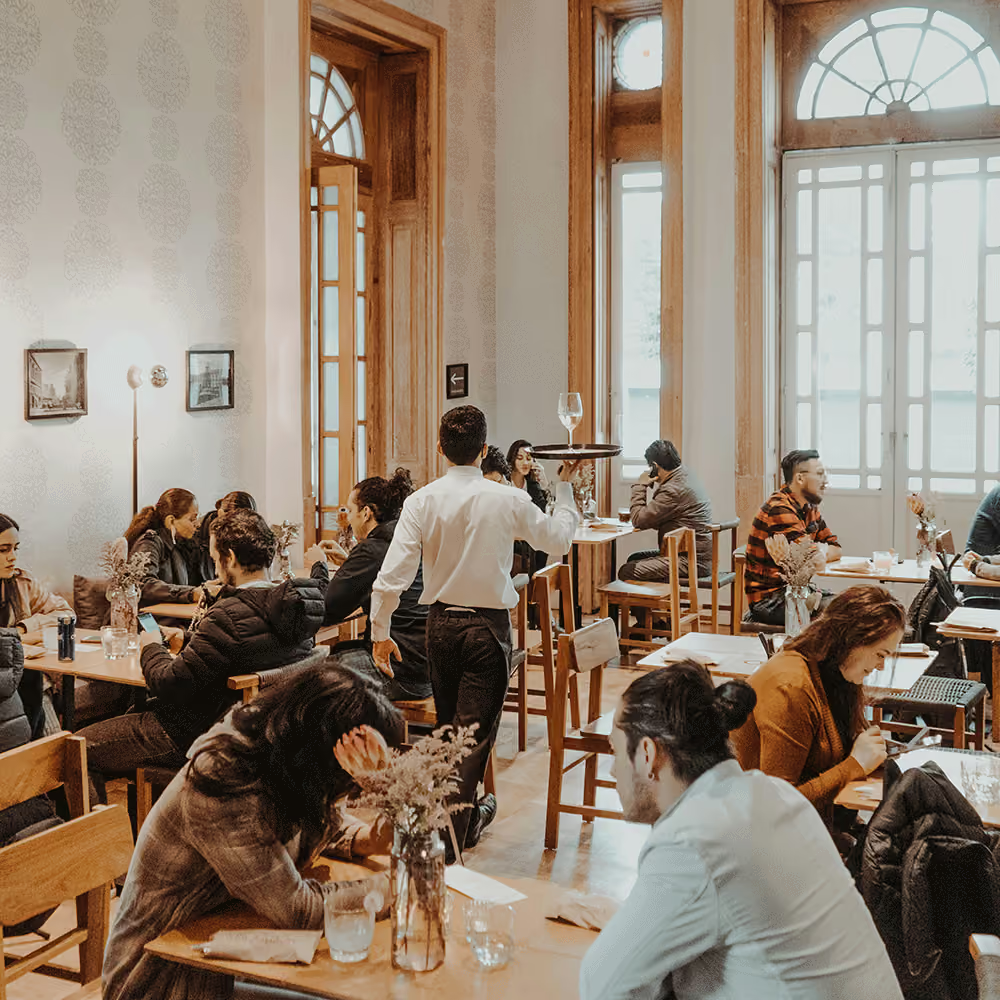
What an empty table costs and five measures that actually work
You can reduce restaurant no-shows by combining three elements: an immediate confirmation, an automatic reminder one to two days before the booking, and a reservation system that allows guests to cancel online themselves. Deposits or credit card guarantees further reduce the no-show rate, but are most worthwhile for high-demand slots and large groups.
An empty four-top table on a Saturday night is revenue you won't recover. This guide shows you what a no-show actually costs, why guests cancel or simply don't show up, and which five measures really work. You will get a comparison table, a clear answer on deposits, and the right tone for your reminders.
Let's walk through an example. The following assumptions are illustrative and not based on luca data. They are simply meant to help you estimate the scale for your own business.
Take a four-top table on a Saturday night. With an average spend of €50 per guest, the table represents €200 in revenue. If you roughly deduct 30% for the cost of goods sold, you are left with a contribution margin of around €140, which is completely lost in the event of a no-show.
The actual damage is often greater. On a fully booked night, you turned away walk-in guests because of that table. Two no-shows on a Saturday cost you around €280 in contribution margin based on this calculation.
This is exactly where structured reservations come in. Like luca Reservations Read on to find out how to bundle confirmations, reminders, and cancellations into a single process.
Very few no-shows are intentional. Most are caused by simple issues that you can resolve with the right process.
The most common reason is the friction involved in cancelling. If someone booked by phone and can only reach staff during service hours, they often won't bother cancelling at all. The second reason is forgetfulness: a table booked three weeks in advance is easily forgotten without a reminder. Then there are last-minute factors like sudden changes in weather, illness, or a spontaneous change of plans within the group.
For you, this means you can prevent the majority of no-shows before they happen. An easily accessible cancellation option turns a no-show into a timely cancellation, allowing you to rebook a table that becomes available in the afternoon for the evening.
These five levers are the most commonly used in practice. They are helpful individually, but much more effective when combined.
The first three measures form the foundation for almost every business. They are cost-effective, improve the guest experience, and can be fully automated. Credit card guarantees and overbooking are more powerful tools for specific situations that should be used with caution.
Deposits and credit card guarantees are the most powerful tools against no-shows. However, they are also the tools most likely to deter guests. The real question is when to use them.
A deposit makes sense when demand is predictably high and the risk of wasted inventory is significant. This includes New Year's Eve and public holidays, set menu evenings, large groups of six to eight people or more, and tables that are difficult to rebook if a cancellation occurs. In these cases, guests accept a guarantee as a standard part of the booking process.
For a spontaneous reservation for two on a Tuesday, however, a deposit is out of place. It creates friction where none is needed and sends guests to competitors with a simpler booking process. A good rule of thumb: use financial guarantees selectively for the 10 to 20 percent of your bookings where a no-show would hurt the most.
You can find information on the legal aspects in Germany in the FAQ section below. If you do use deposits, an integrated payment solutionwill help ensure that the amount, receipt, and subsequent reconciliation are handled seamlessly.
Many no-shows start on the phone. If someone can only reach you during service hours, bookings are often imprecise, cancellations are rare, and your team is tied up on the line. A digital reservation system changes that.
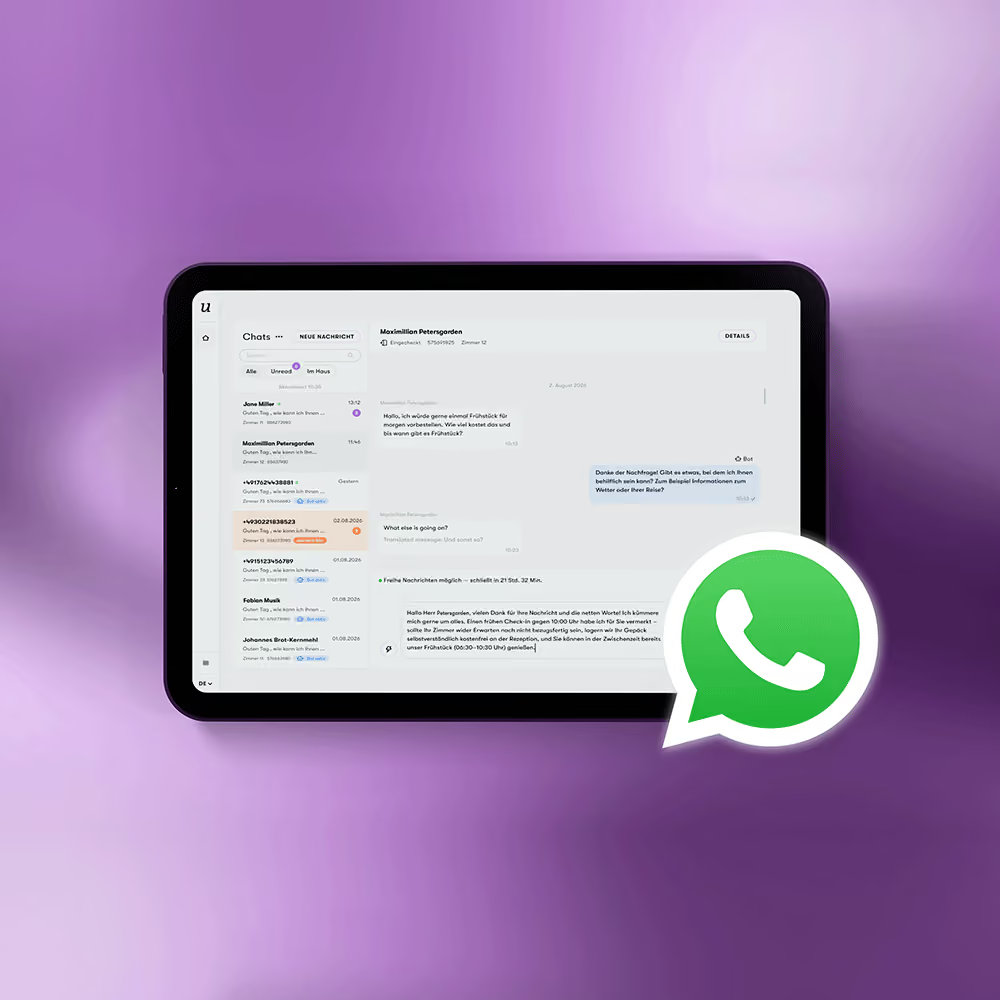
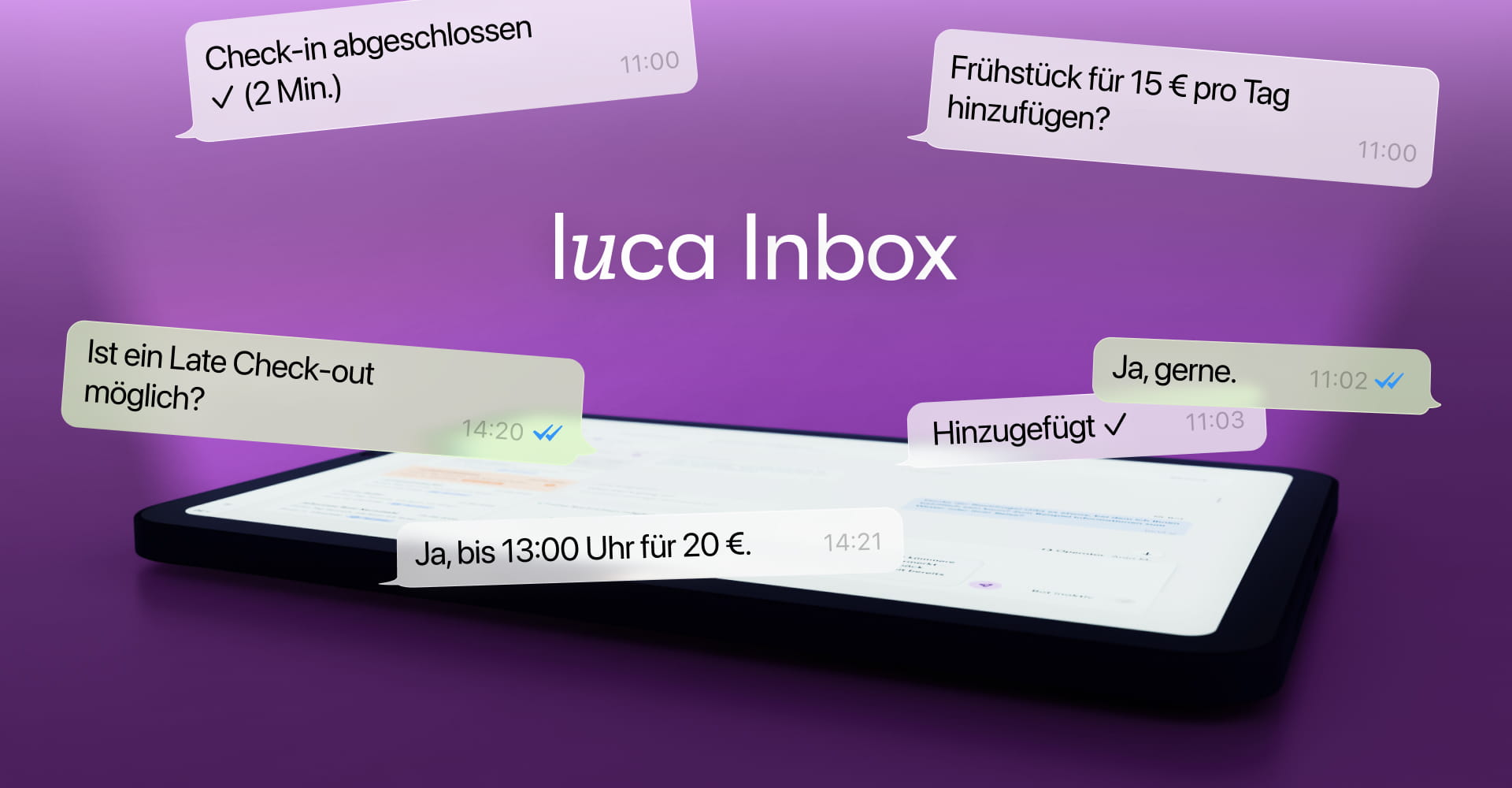
With luca Reservations , guests can book and confirm their table in just a few clicks, even outside of your phone hours. Your team manages all requests centrally in the luca Locations Dashboard, without needing to maintain a separate reservation book. Confirmations and reminders are sent automatically, and self-cancellation is built directly into the booking. luca has launched this feature under the title "End No-Shows" in early access.
The process integrates smoothly with the rest of the evening. Ordering and menus are handled via the luca app, in the browser, or embedded directly on your own website. To learn how guests can pay via QR code at the end and free up tables faster, check out our article on QR code payment in restaurants.
A reminder should be helpful, not demanding. The tone determines whether guests feel well-cared for or micromanaged. Keep the message short, specific, and include a clear call to action.
State the key facts in a single sentence: date, time, and number of guests. Include a direct link for rebooking or cancellations right next to it, so they don't have to call. A friendly note like "Just let us know if your plans change" makes it easier for guests to cancel in time.
As a rule of thumb, send reminders one to two days before the reservation. This is close enough to stay top-of-mind, but early enough for you to rebook the table if they cancel. One reminder is usually enough; sending more can quickly become annoying.
Don't book out every table. Depending on your business, intentionally keep some spots open for walk-ins, especially during peak hours. Digital reminders and self-cancellation options also give you planning security earlier, allowing you to put freed-up tables back on the market.
Yes, deposits and credit card guarantees are generally permitted as long as you communicate them transparently in advance. Guests must clearly see the terms during booking, including the deadline for free cancellations. This information does not constitute legal advice. When in doubt, consult your tax or legal advisor regarding the specific structure of your cancellation policy.
One to two days before the reservation has proven to be the most effective. This brings the booking back to the guest's attention and gives you enough time to rebook the table if they cancel. A single, friendly reminder with a direct cancellation link is usually sufficient.
Yes. luca Reservations is part of the same platform as ordering and payment. Guests order via the luca app, in their browser, or on your website, and payment is handled through luca Pay. This allows you to manage reservations, orders, and invoices in the luca Locations Dashboard without switching systems.





.png)


