BLOG
>
ARTICLE
Digital Guest Directory: The 2026 Hotel Buyer's Guide
Paper, tablet, app, or web-based via QR code: An honest comparison of the four models
July 14, 2026
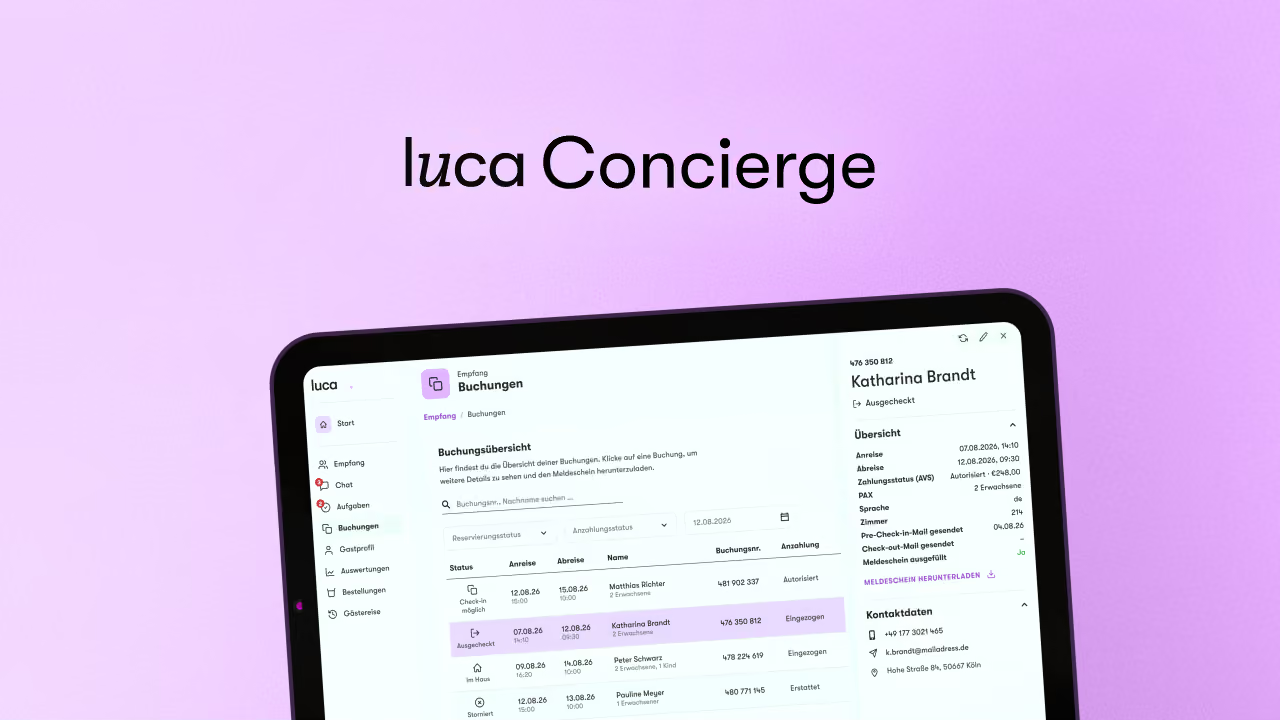
Paper, tablet, app, or web-based via QR code: An honest comparison of the four models
A digital guest directory is the classic hotel information folder in digital form: guests access Wi-Fi details, breakfast times, spa bookings, house rules, and local tips via their smartphones. Instead of flipping through a leather binder or calling the front desk, they simply open a link or scan a QR code. Every call asking about breakfast times costs your team minutes that are better spent at check-in. A well-maintained digital guest directory answers these questions before they ever reach the front desk.
This guide compares the four common approaches to digital guest directories. You will receive a checklist of essential content and see how to manage offers and upselling through the directory. By the end, you will know which model best suits your property.
The traditional guest directory is a physical binder kept in the room. It contains the Wi-Fi password, room service menu, house rules, and a few local flyers. The challenge lies in maintenance. If breakfast times change, someone has to manually update every single binder in the hotel.
A digital guest directory moves this information to your guests' smartphones. Your team is freed from two recurring tasks: reprinting materials and answering the same questions over and over. Wi-Fi, breakfast, check-out times, and spa information: the directory handles it all. luca presents this as a digital concierge that guests can access via a link without needing to download anything.
These models differ in terms of cost, maintenance, guest adoption, and whether they reach guests before arrival. The following table provides a comparison.
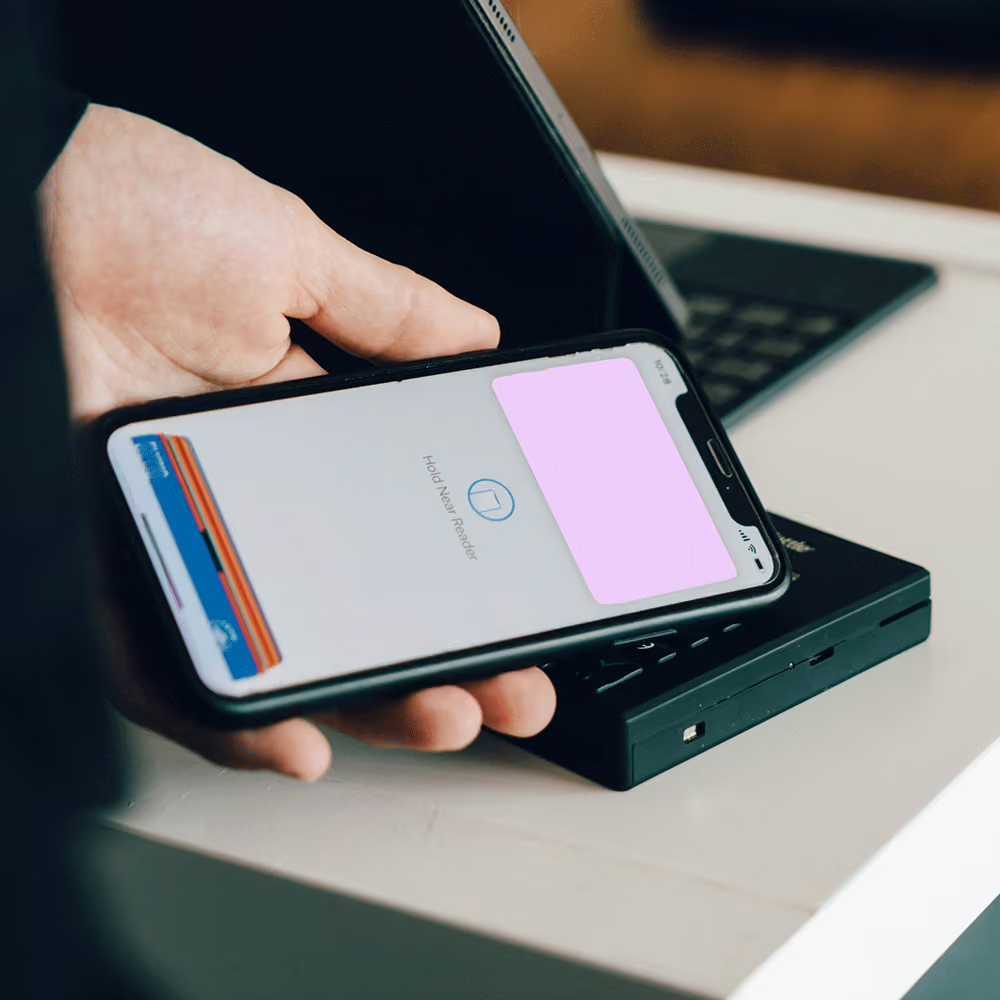
Paper loses value with every update. Tablets are ready in the room and feel premium, but are tied to one device per room. A native app engages guests once installed, but the download barrier limits reach. Web-based QR codes reach guests with a single scan, even as early as the booking confirmation before arrival.
A digital guest directory is only useful if it covers the most common questions. This content forms the foundation:
Keep the homepage concise. Guests are usually looking for something specific, like the Wi-Fi password or breakfast hours. A clear overview gets them to their goal in just two steps.
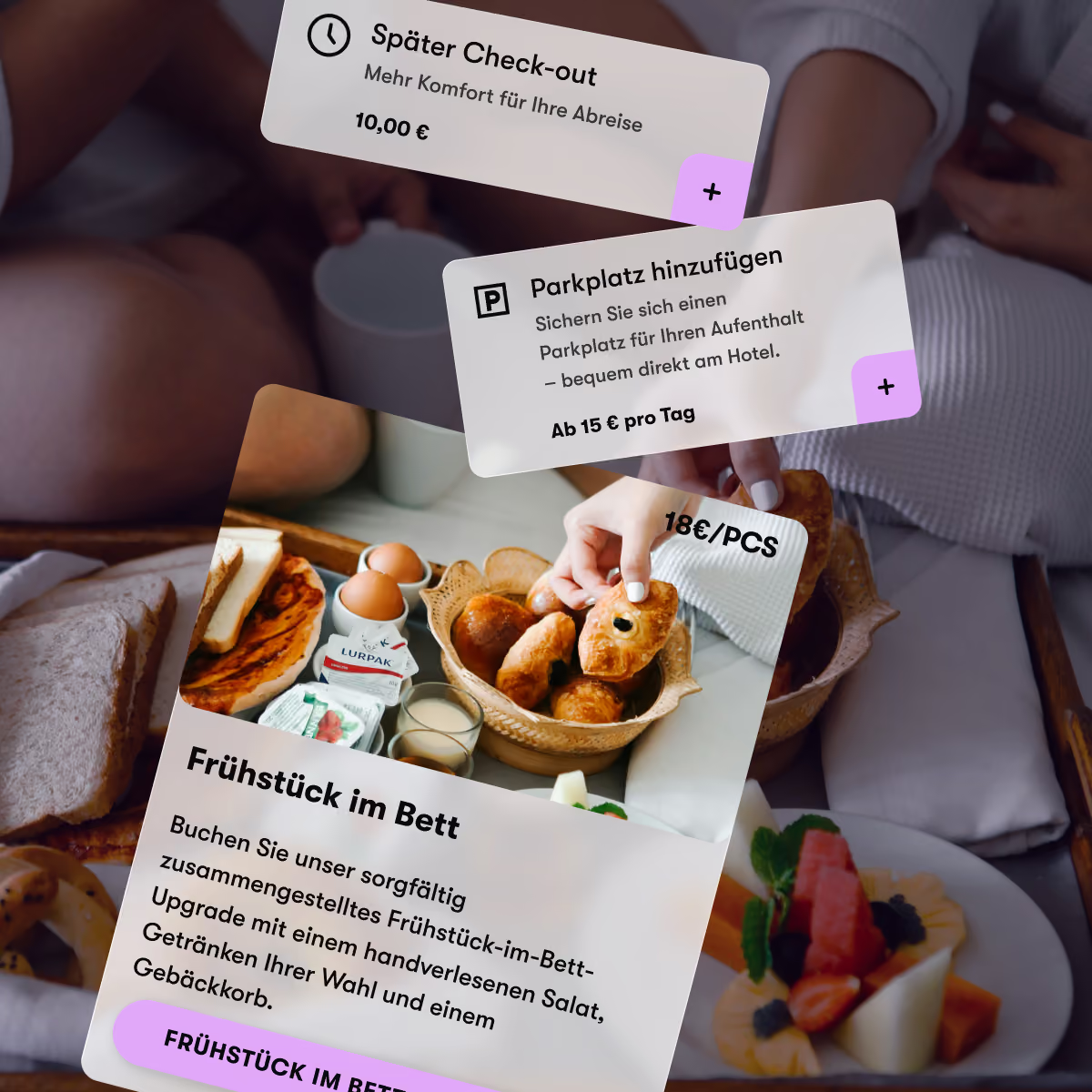
This is where the digital directory pays off beyond just providing information. Offers appear exactly where guests are already looking for details. A room upgrade, a late check-out, or a spa session can be booked with a single tap. luca automatically displays these offers throughout the guest journey. This upselling runs without any manual effort from your team.
The data from the luca system shows the impact: up to 64% upsell conversion and an average order value of up to €70. A practical example is the 165-room Isla Brown Corinthia Resort & Spa (Curio Collection by Hilton). Using QR codes on sun loungers, by the pools, and at the rooftop bar, guests ordered directly from their seats. The resort created 180 additional points of sale and generated €12,500 in extra F&B revenue in a single month.
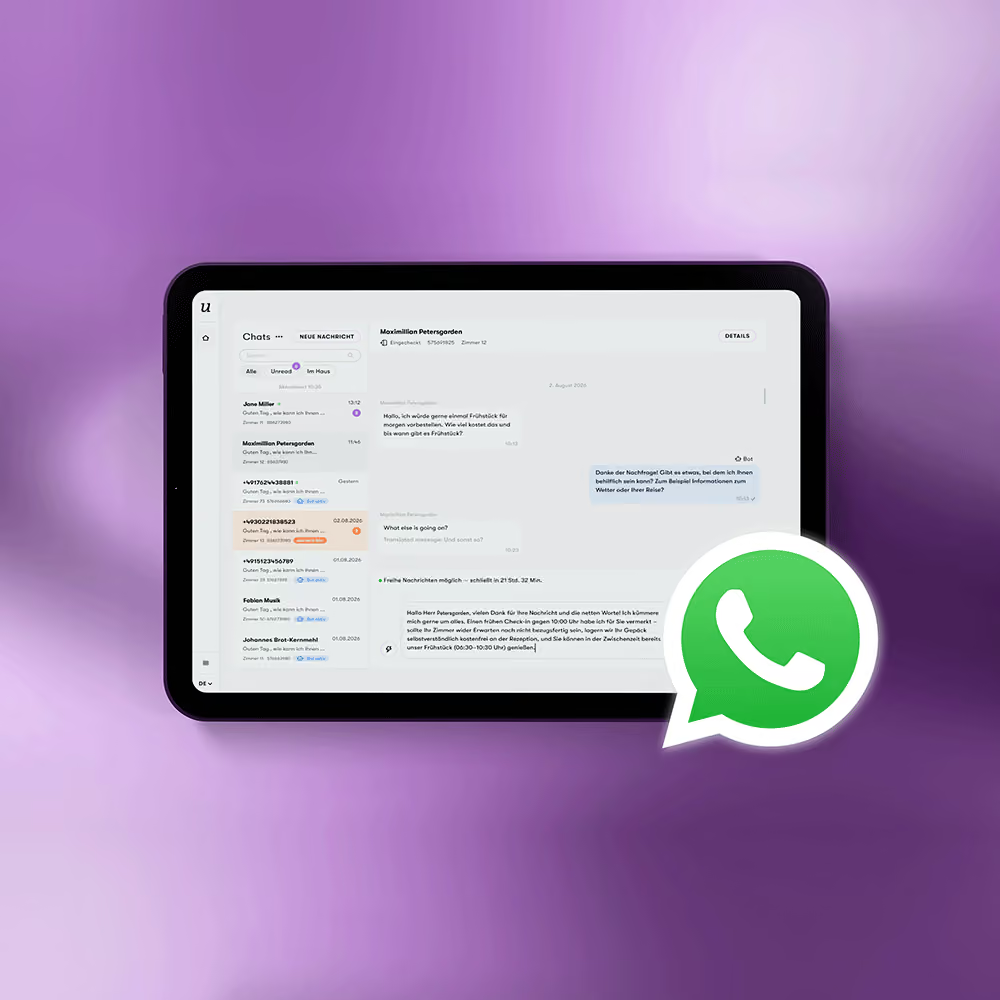
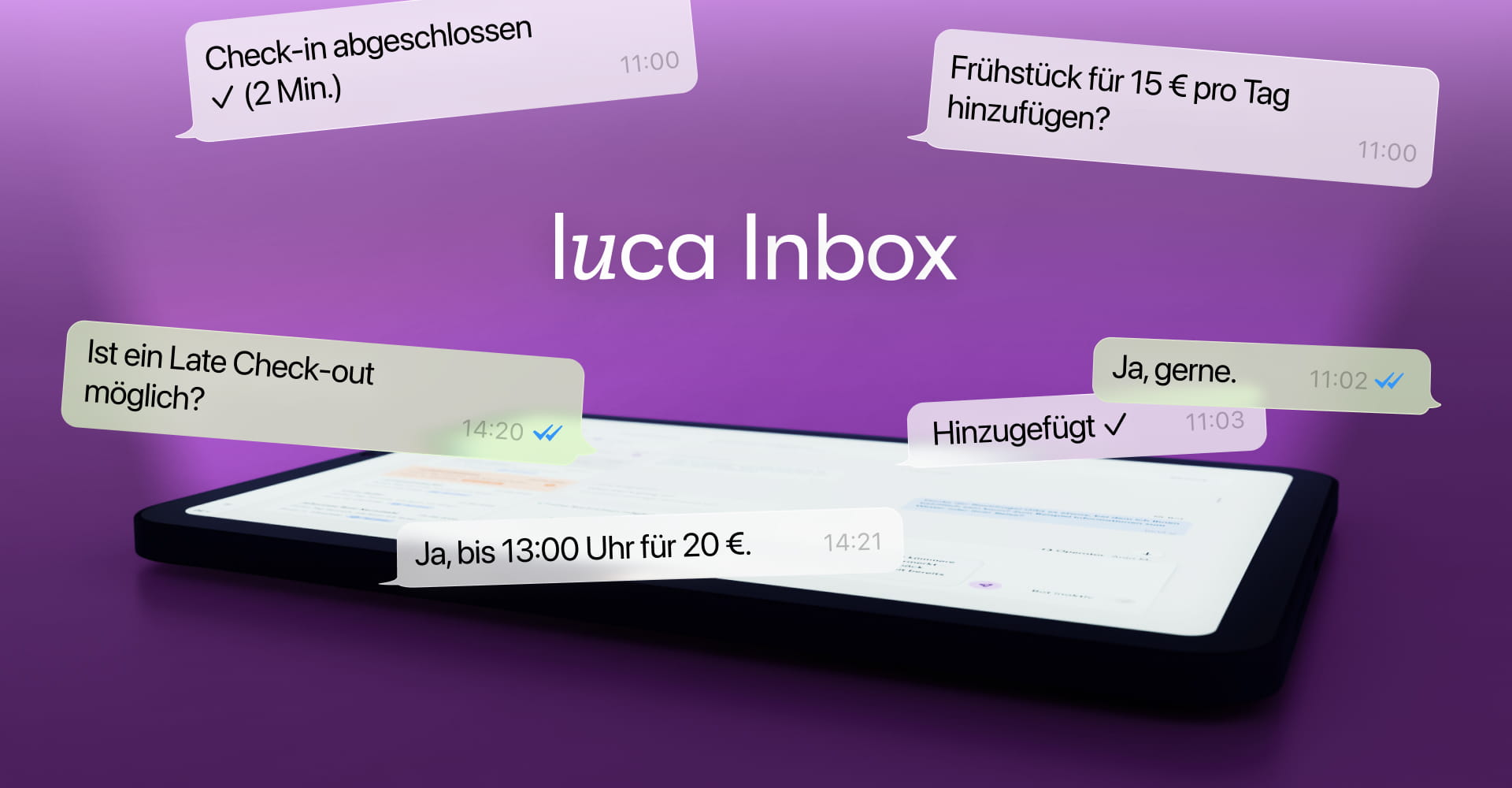
A directory answers standard questions. For everything else, you need a chat feature. With luca Chat , guests can reach you via WhatsApp or email, and the AI automatically answers recurring questions. If a guest requests fresh towels, a task is created for the team immediately.
Multilingualism is a standard feature. International guests can read Wi-Fi instructions and house rules in their own language, and the chat function responds in multiple languages. This reduces inquiries and misunderstandings at the front desk.
For most properties, a web-based guest directory that requires no download is the obvious choice. It doesn't require hardware in every room, can be updated centrally in minutes, and reaches guests even before they arrive. With luca, up to 69% of guests use the directory before checking in. Combined with the digital check-in guests fill out their details in advance and start their stay well-informed.
There are two trade-offs to consider for an honest assessment. A tablet in the room has a physical presence: it is visibly ready to use without guests needing to scan a code. And a native app is worthwhile for large chains with loyalty programs that want to engage guests across many stays. For the majority of properties, however, the lower costs and greater reach of a web-based solution outweigh these factors.
For most properties, yes. The web-based directory reaches more guests at a lower cost and can be updated centrally. Tablets still have their place if physical presence in the room is important to you. Both approaches can also be combined.
Costs depend on the model. A paper directory incurs ongoing printing costs, tablets require hardware per room plus maintenance, and a native app involves development and upkeep costs. Web-based solutions operate via a license without the need for hardware in every room. luca provides specific pricing during a demo, as it depends on the scope of the modules used.
A PMS is not a requirement to get started. luca can be connected to your existing PMS so that booking data is imported without the need for double entry. Whether connected or not, you manage content like Wi-Fi, breakfast, and house rules centrally within the luca system.
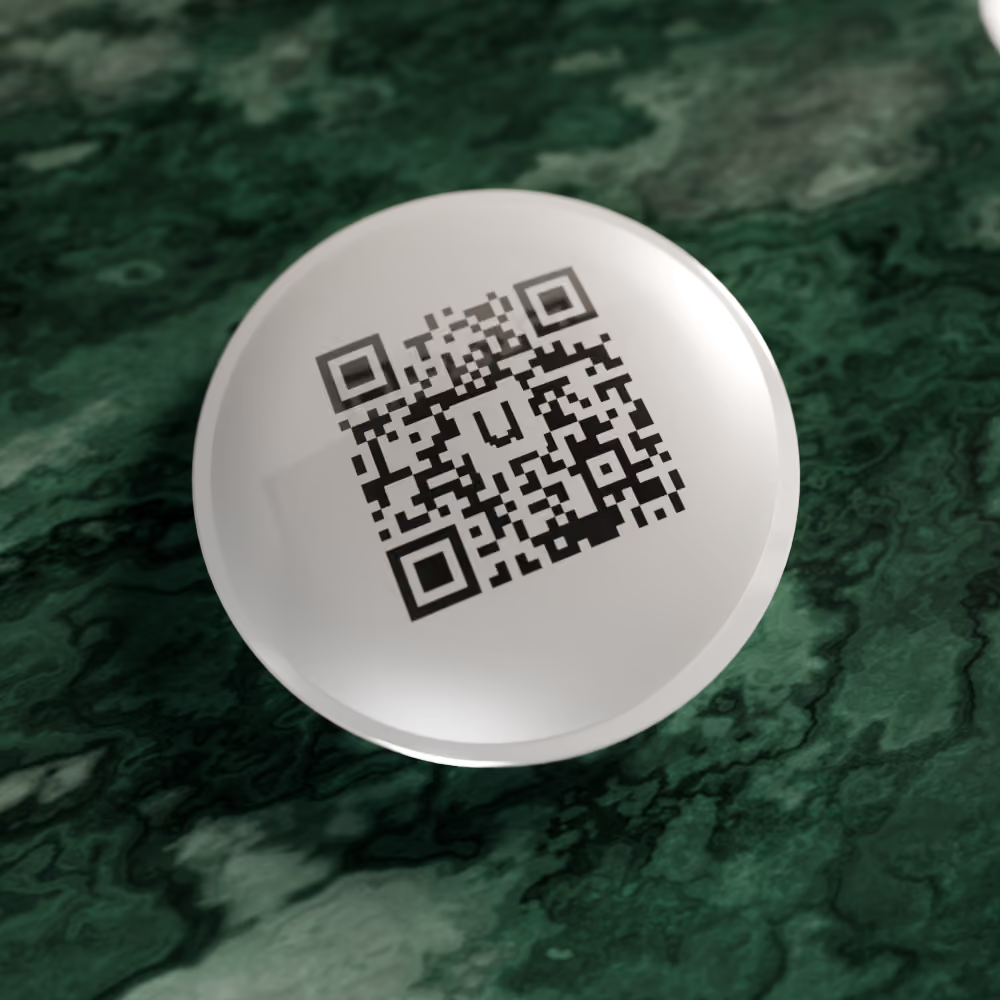
Guests open the directory via a link or QR code, with no app installation required. You place the code exactly where guests need it: in the room, at the front desk, or even in the booking confirmation. This allows you to reach them before they even arrive.







.png)


